Tana Toraja - where the dead live with us
8-10 min read
Some places are easy to visit. You arrive, you look around, you take a few photographs, and you leave with a simple story.
Tana Toraja is not one of those places.
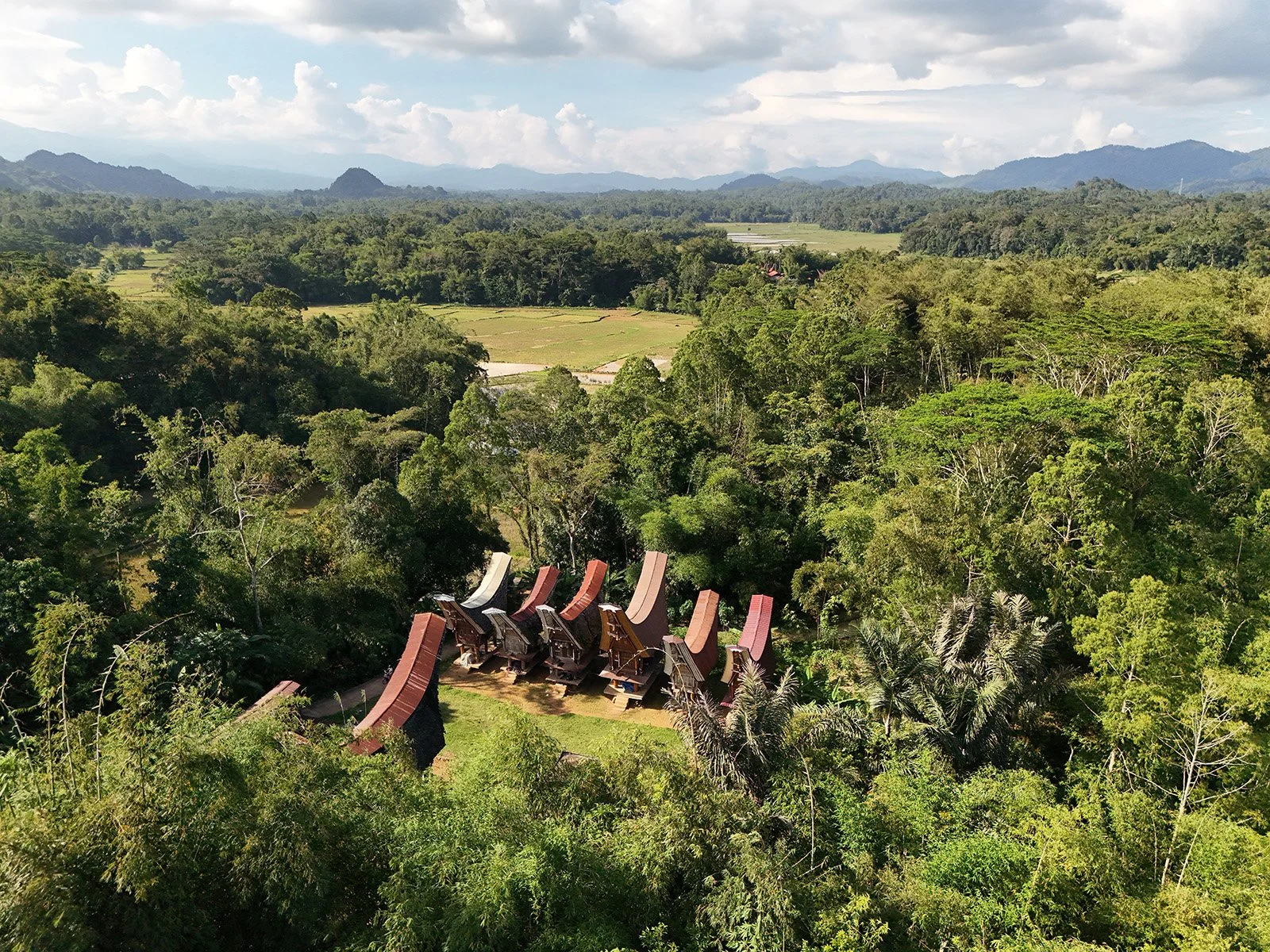
Hidden in the highlands of South Sulawesi, Indonesia, Tana Toraja is a landscape that asks you to slow down and flip your cultural believes around. At first, it may be the architecture that catches your eye: the dramatic curved roofs of the traditional tongkonan houses, rising like boats above the villages. Then come the rice terraces, the misty hills, the bamboo forests, the stone graves, the caves, the carved figures watching over the land.
But after a few days, Toraja becomes something deeper than a collection of sights. It becomes a place where landscape, family, ritual and memory are almost impossible to separate.
We spent 2.5 days exploring the area around Rantepao, the main base for many travellers visiting Toraja. It was not enough to fully understand such a complex culture - perhaps no visit ever is - but it was enough to feel that this is one of Indonesia’s most powerful cultural landscapes.
Where is Tana Toraja?
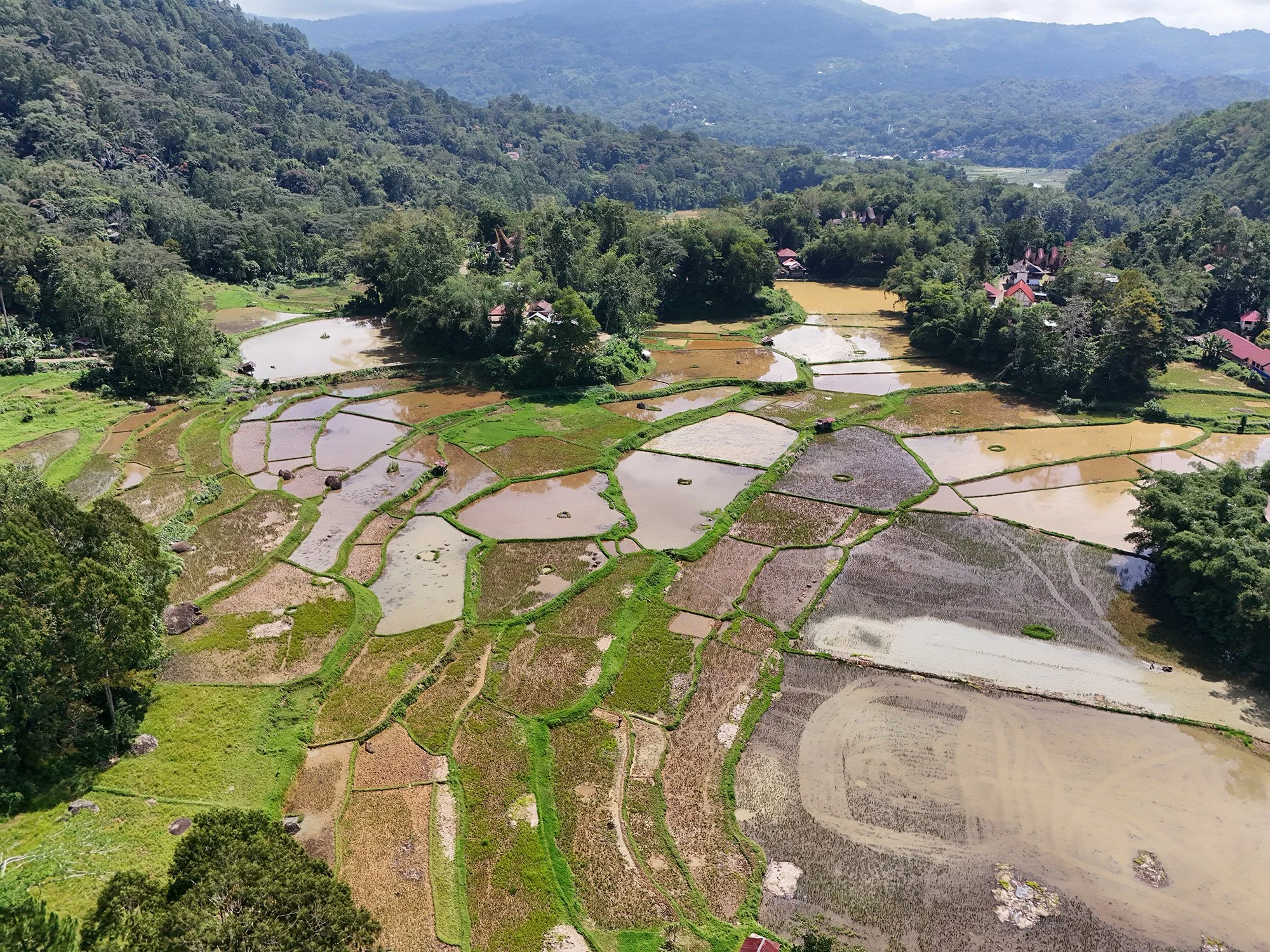
Tana Toraja is located in the mountainous interior of South Sulawesi, far from the beaches and tropical imagery often associated with Indonesia. The journey itself already prepares you for a different rhythm: winding roads, long distances, valleys, villages and sudden views over green hills. Took us 10 hours from Makassar to reach our destination, Rantepao.
Rantepao is the most common starting point for exploring the region. From here, many of the cultural sites, traditional villages, burial landscapes and natural places can be reached by car or motorbike.
The landscape is immediately striking. Rice fields spread between settlements. Traditional houses stand in family compounds. Cliffs rise behind villages. Roads bend through valleys and small communities. It is not a landscape of isolated monuments, but a living environment where daily life and ancestral memory exist side by side.
Who are the Torajan people?
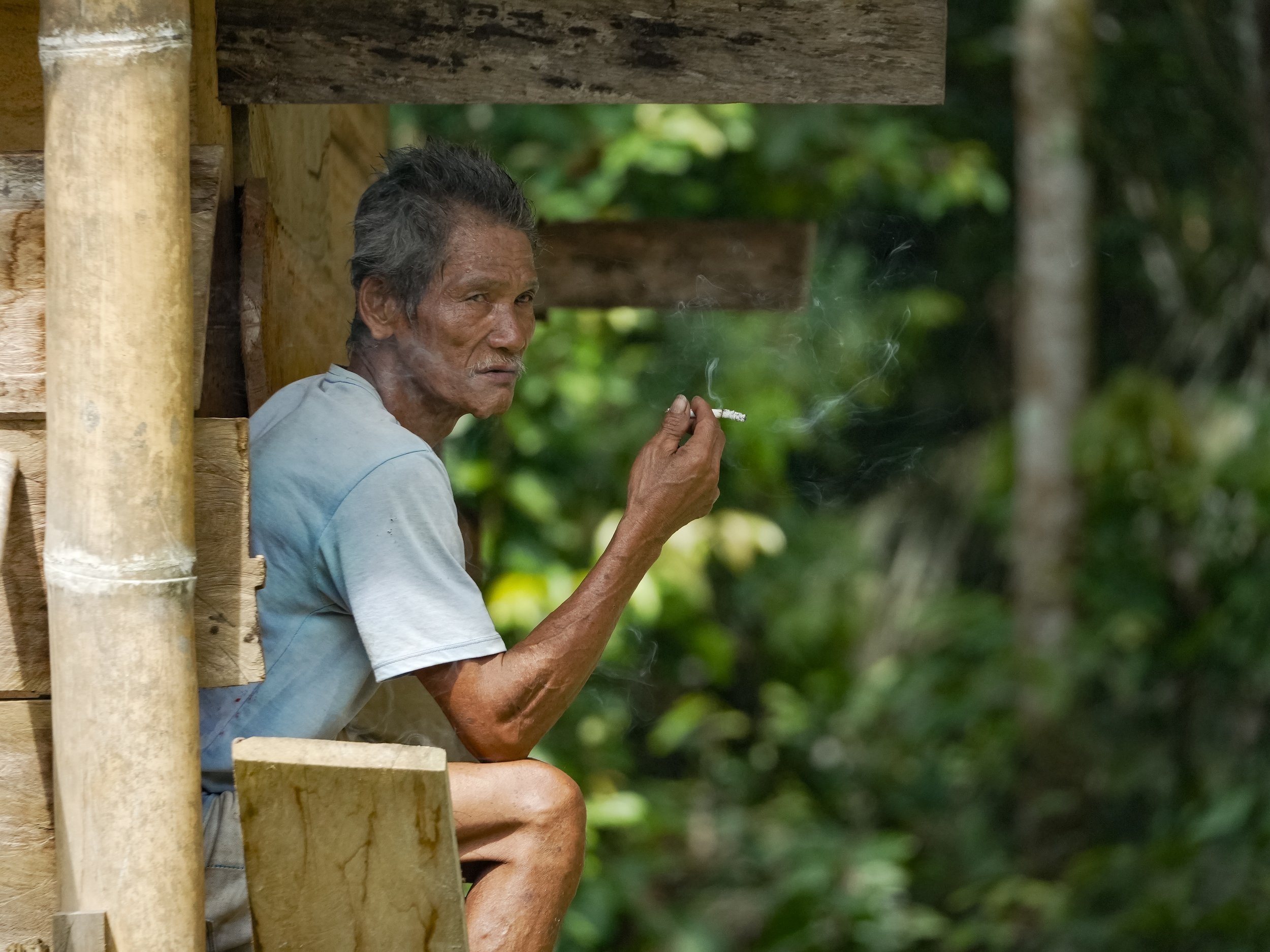
The Torajan people are an Indigenous highland community of Sulawesi, known for their traditional architecture, ceremonial life, wood carving, social structures and deeply symbolic relationship with death and ancestry.
Today, many Torajans are Christian but older belief systems and ancestral traditions still shape cultural life. One of the most important concepts often connected to Torajan tradition is Aluk To Dolo, sometimes translated as “the way of the ancestors.” It is not something I can explain fully as an outsider, but even as a visitor, you can feel how strongly the idea of ancestry is embedded in the landscape.
Family, land and ritual are closely connected. A house is not just a house. A grave is not just a grave. A cliff is not just a cliff. These elements belong to a wider cultural system, where the living and the dead remain part of the same geography.
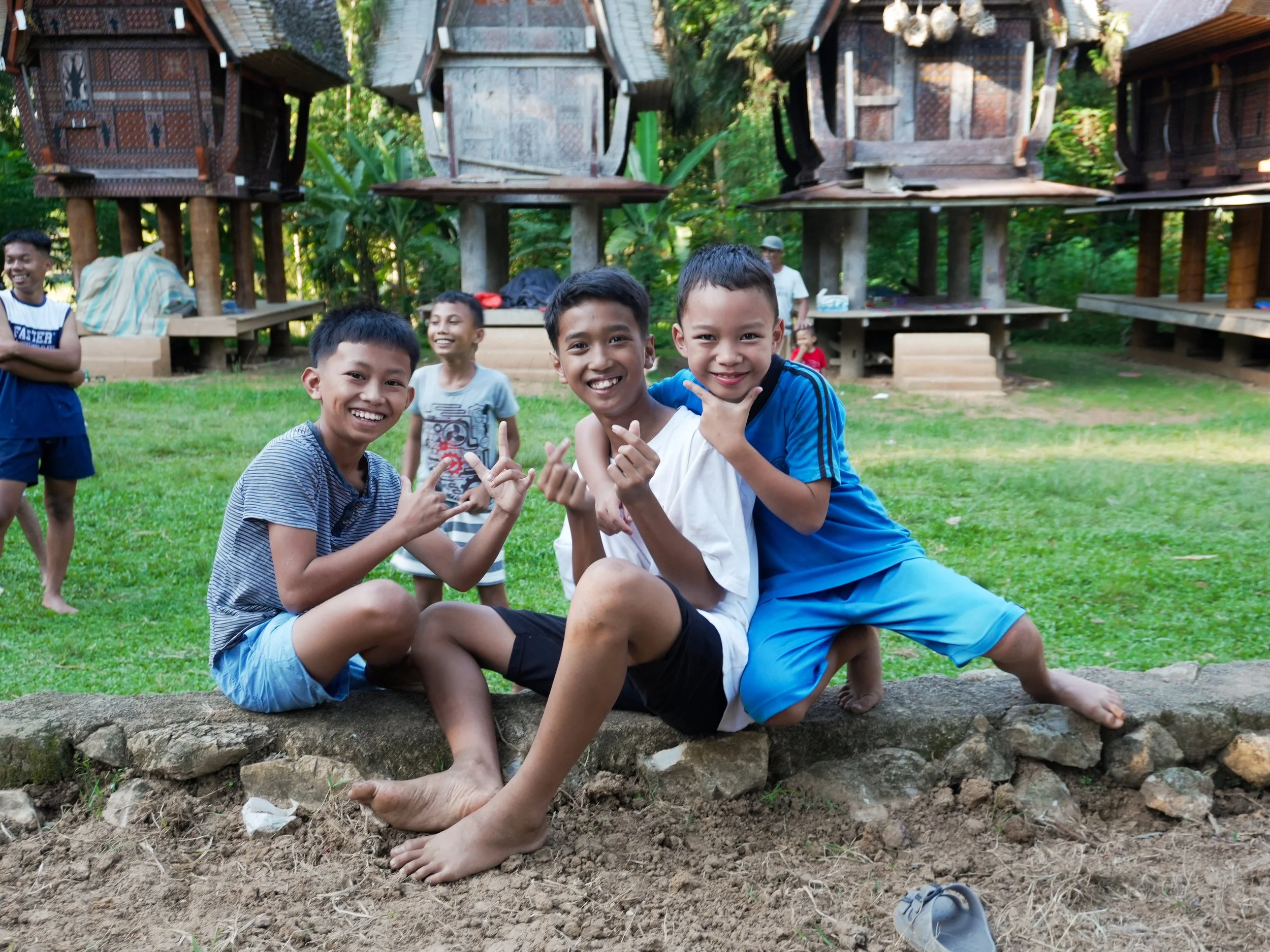
The tongkonan: architecture as identity
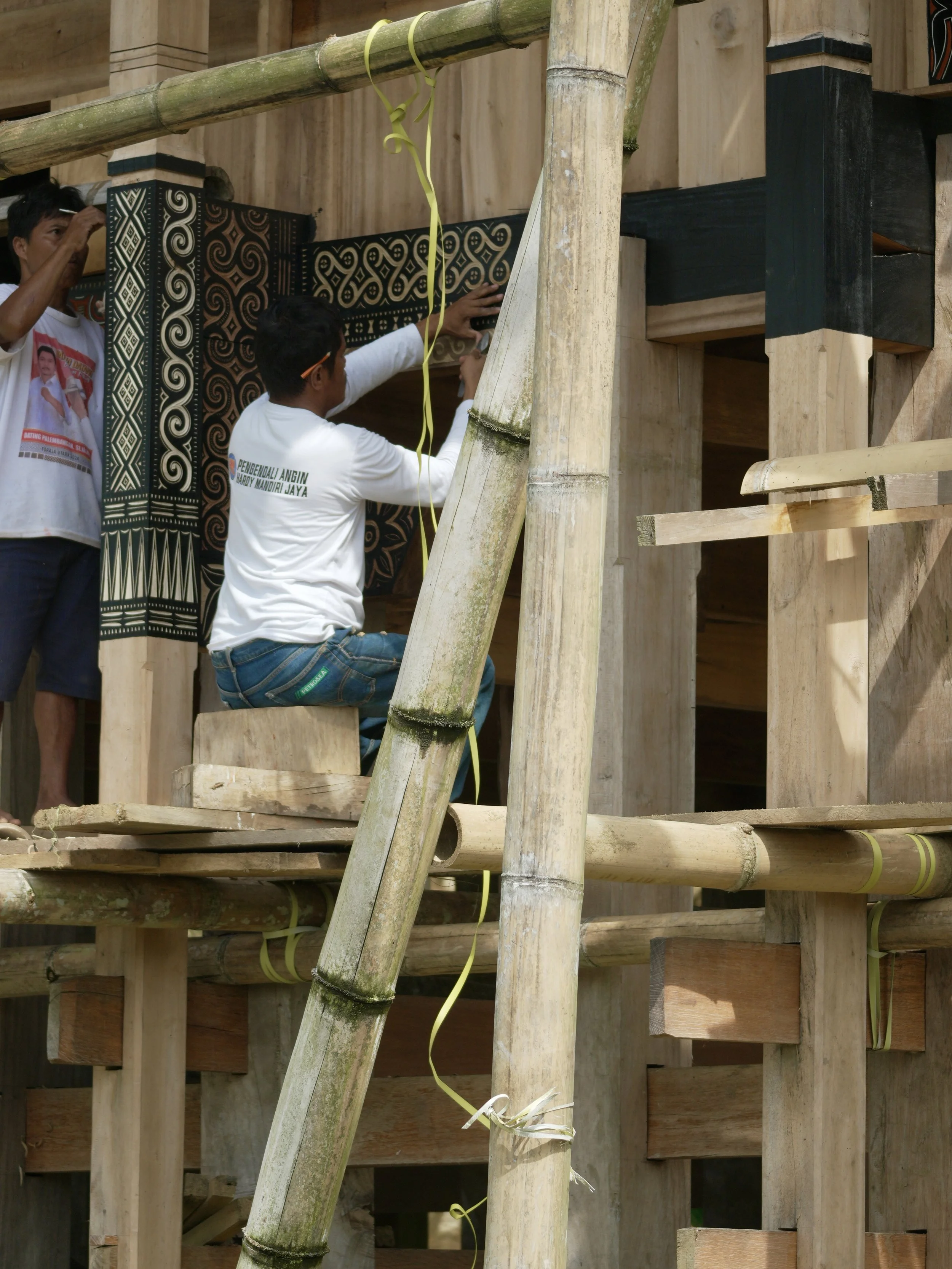
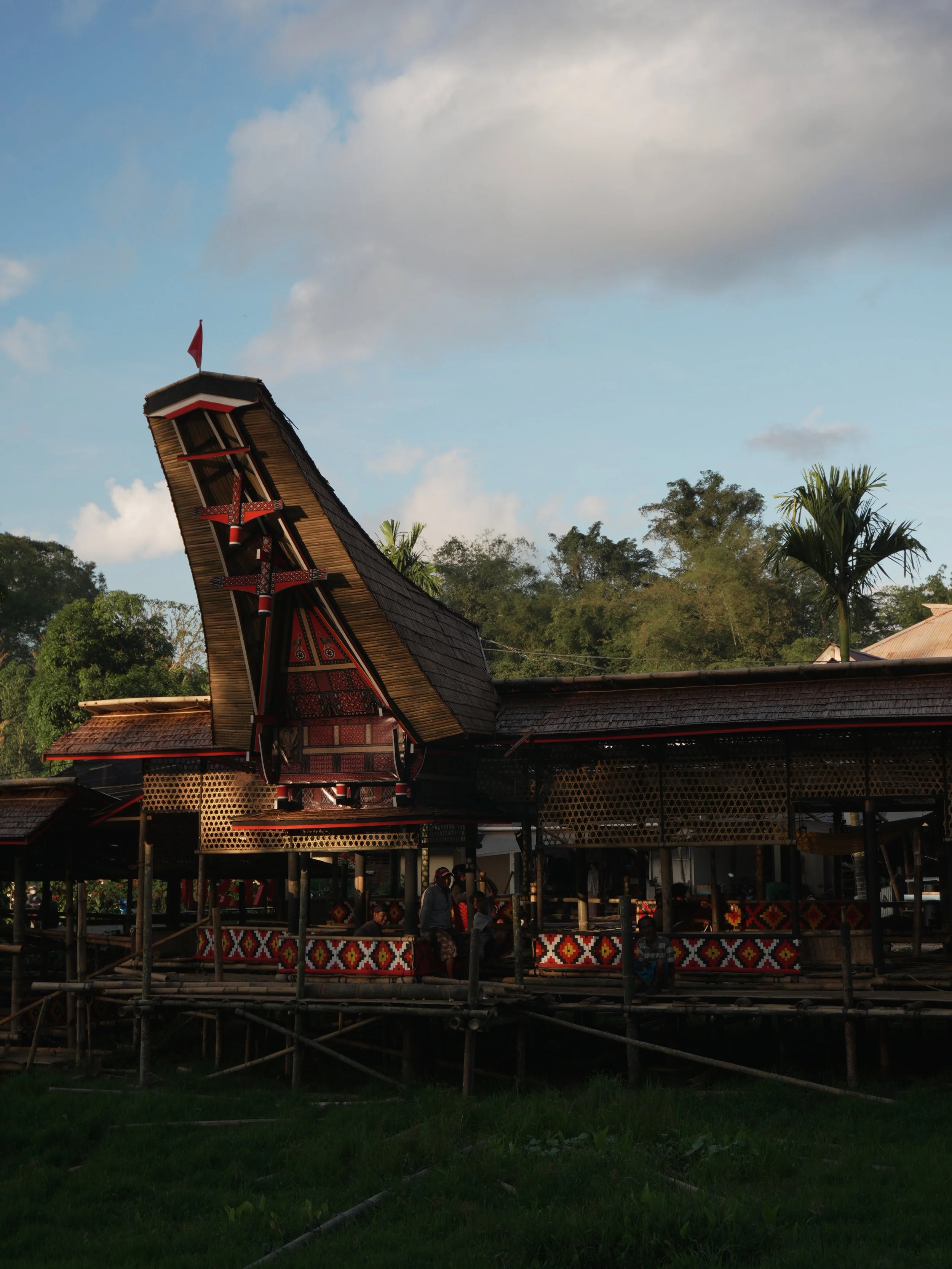
One of the most recognizable symbols of Toraja is the tongkonan, the traditional ancestral house with its high, curved roof. These houses are often described as boat-shaped, though some interpretations also connect the roof form to buffalo horns - another important symbol in Torajan culture.
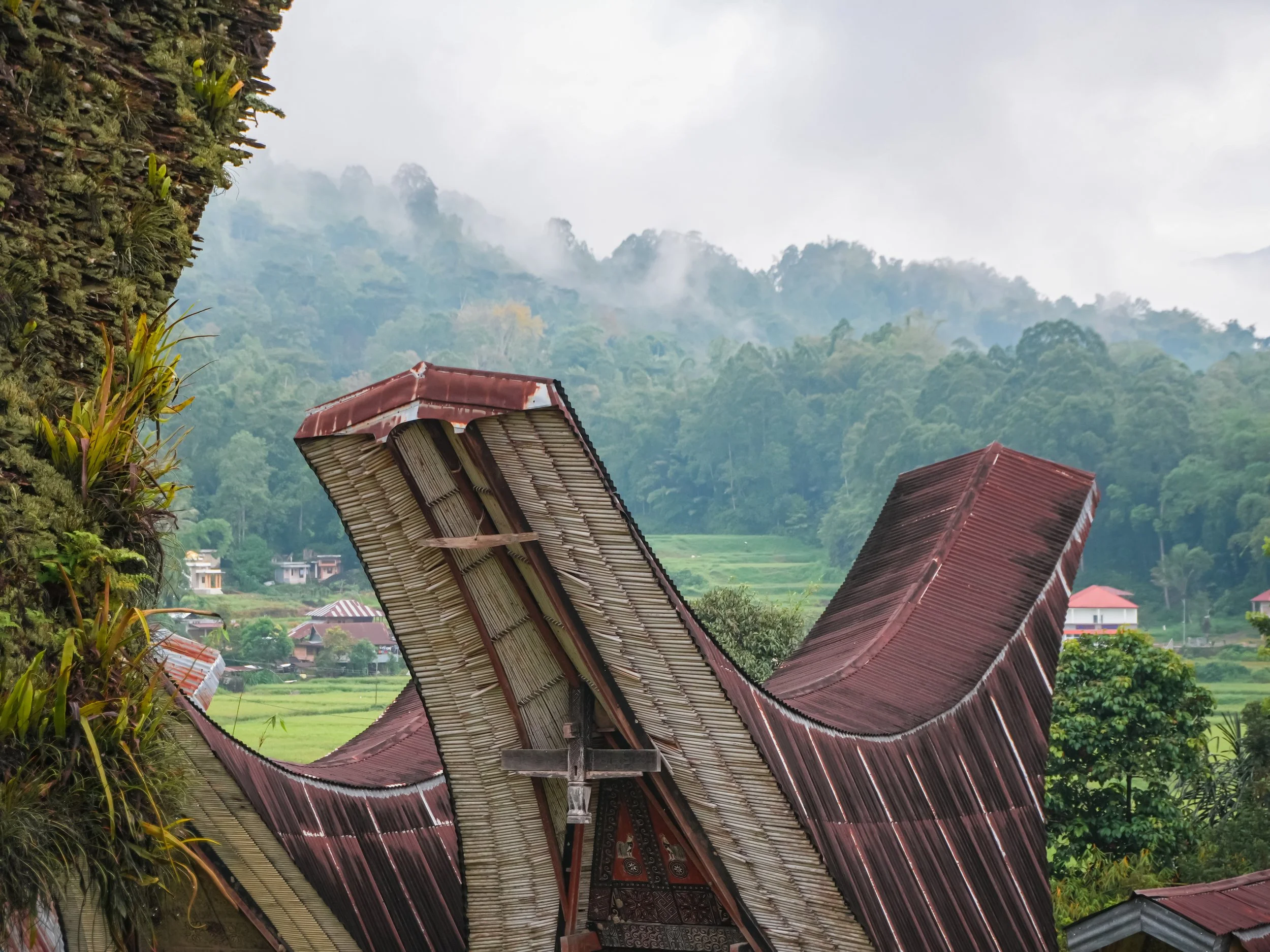
For me, the tongkonan was one of the clearest examples of architecture as identity. These buildings are not simply beautiful objects placed in the landscape. They represent family lineage, status, origin and belonging. Often they stand opposite rice barns - the number of rice barns represents the wealth of the family, creating a strong spatial rhythm within the village compound.
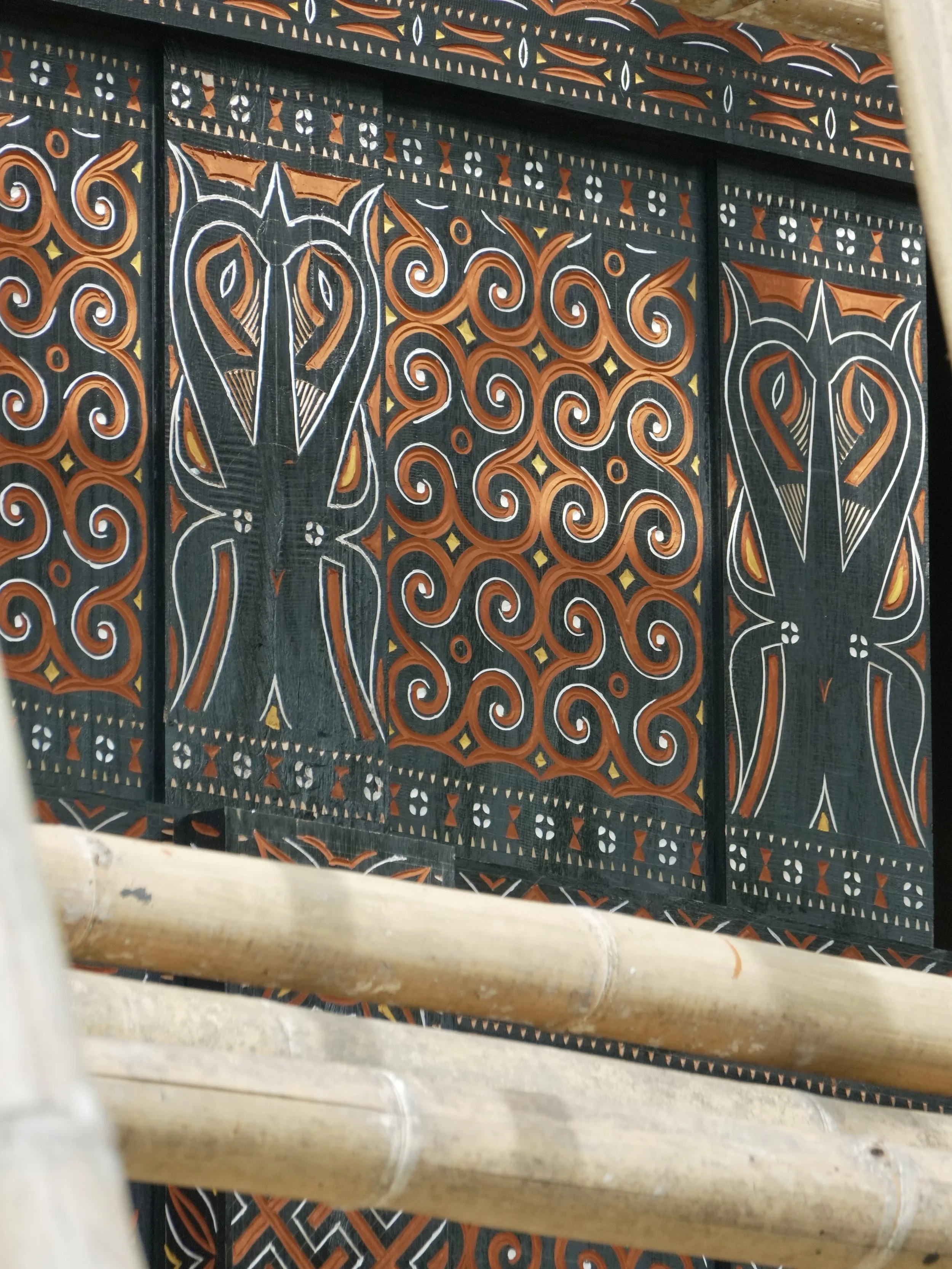
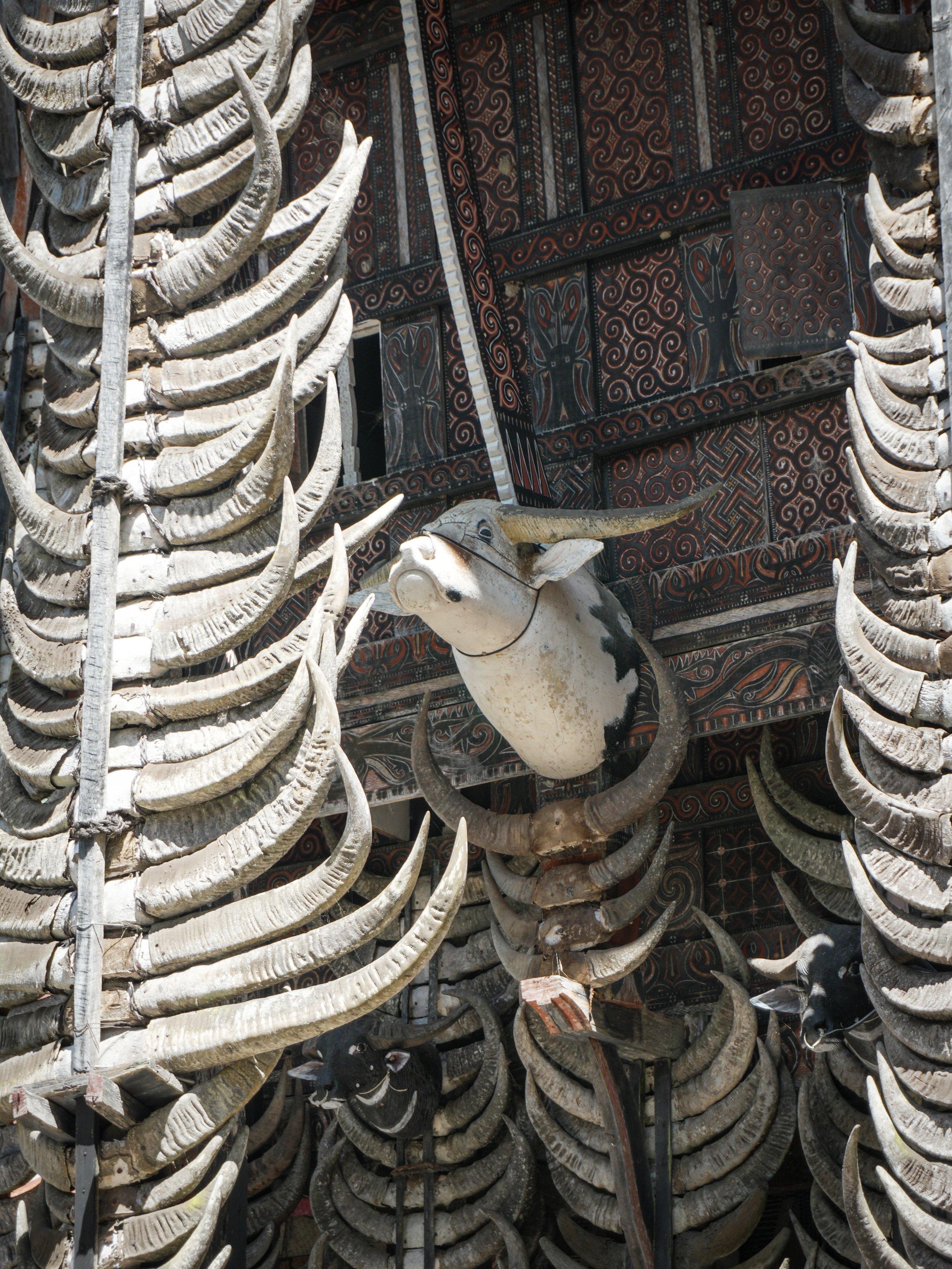
The carvings, colours and buffalo horns on the façades tell stories about family, ceremony and social position. As a landscape architect, I found it truly fascinating: the house is both architecture and cultural marker, both home and symbol, both object and memory.
Understanding death in Toraja
Most visitors first hear about Tana Toraja because of its funeral traditions. But reducing Toraja to “unusual burial customs” would miss the point.
What makes Toraja so powerful is not death itself, but the way death remains connected to life, family, land and ceremony. In many Western cultures, death is often hidden away, separated from everyday life. In Toraja, the relationship seems much more continuous. The dead remain part of the family story, and the final transition is marked through rituals that can involve entire communities.
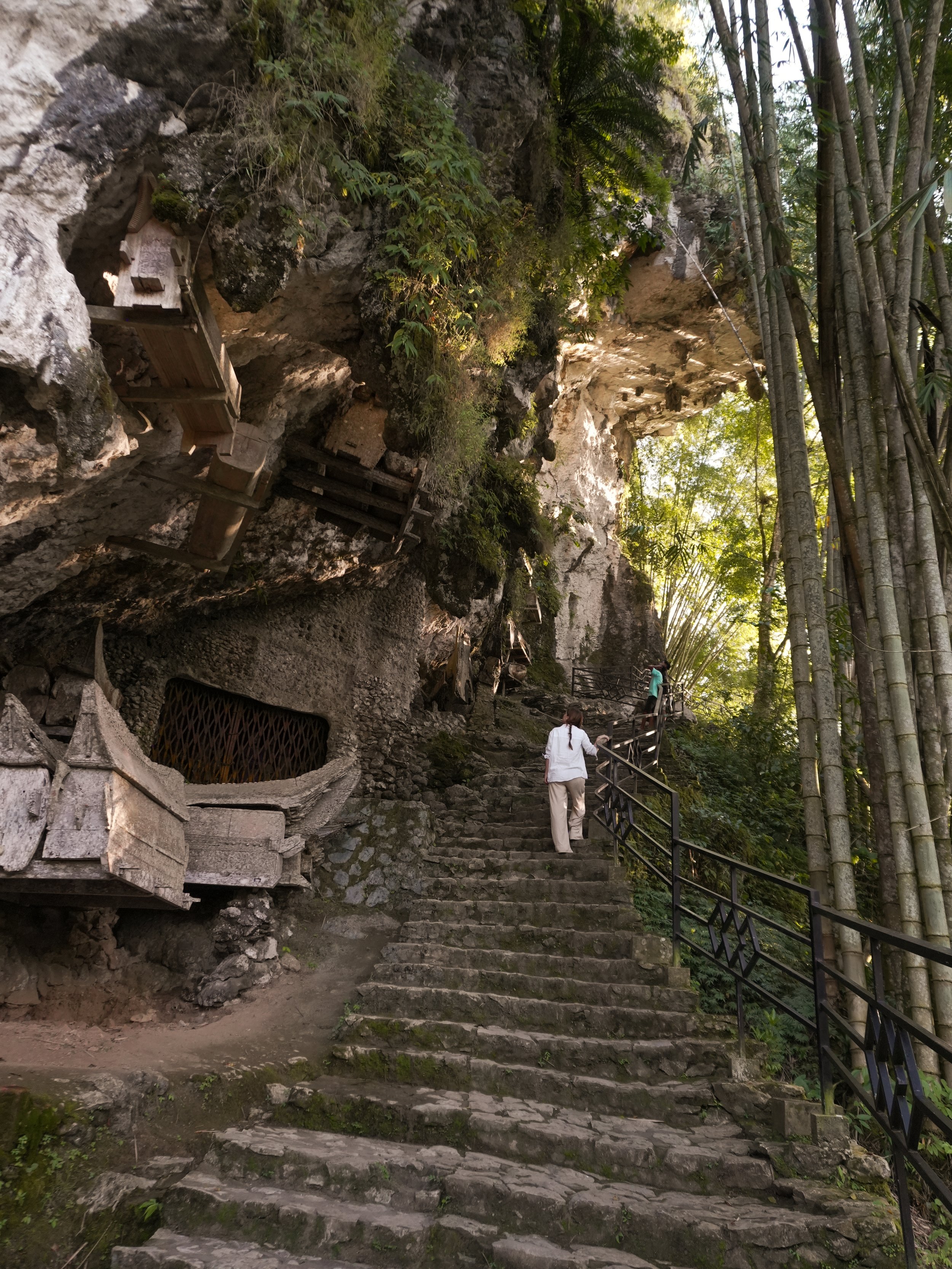
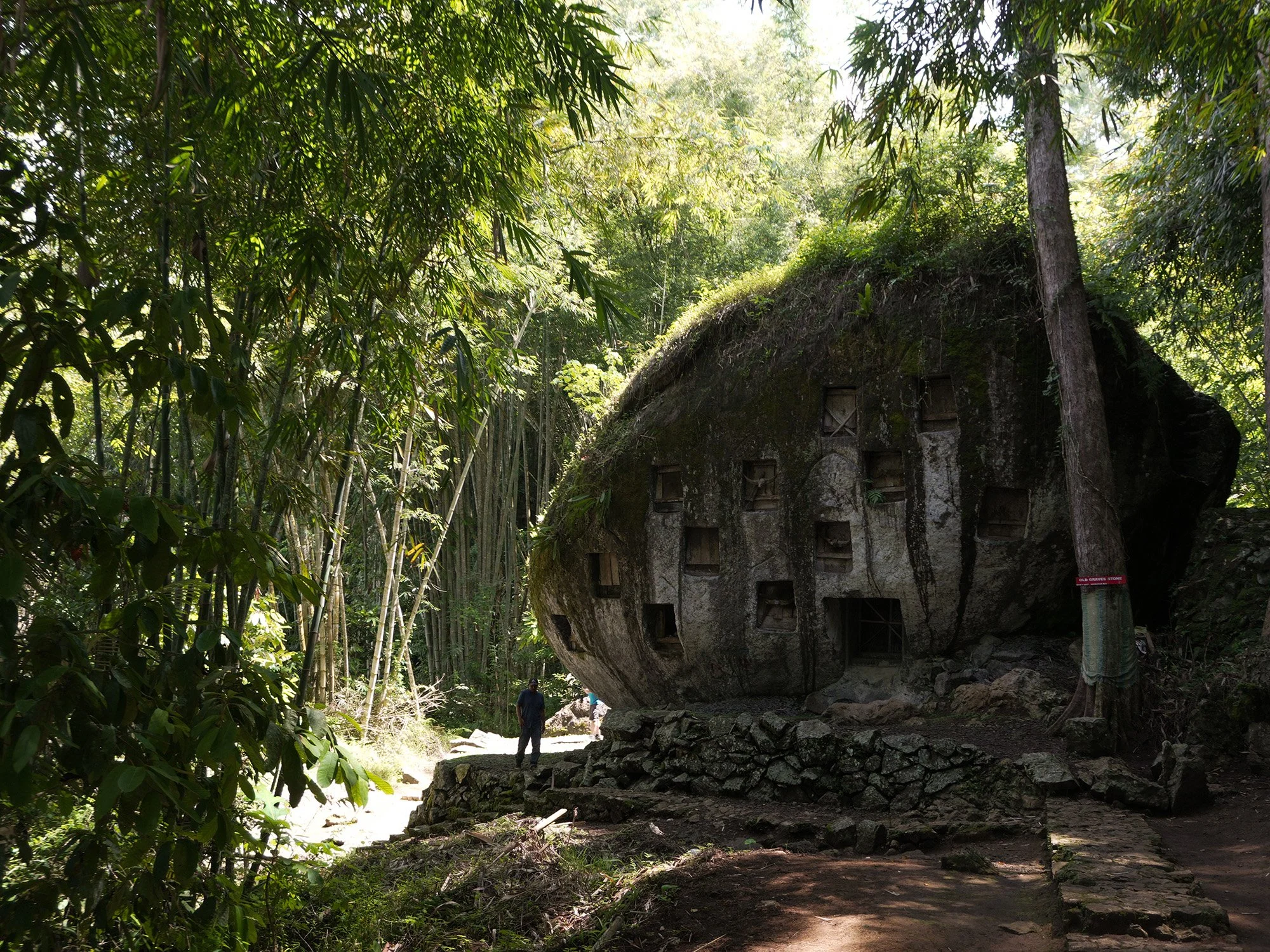
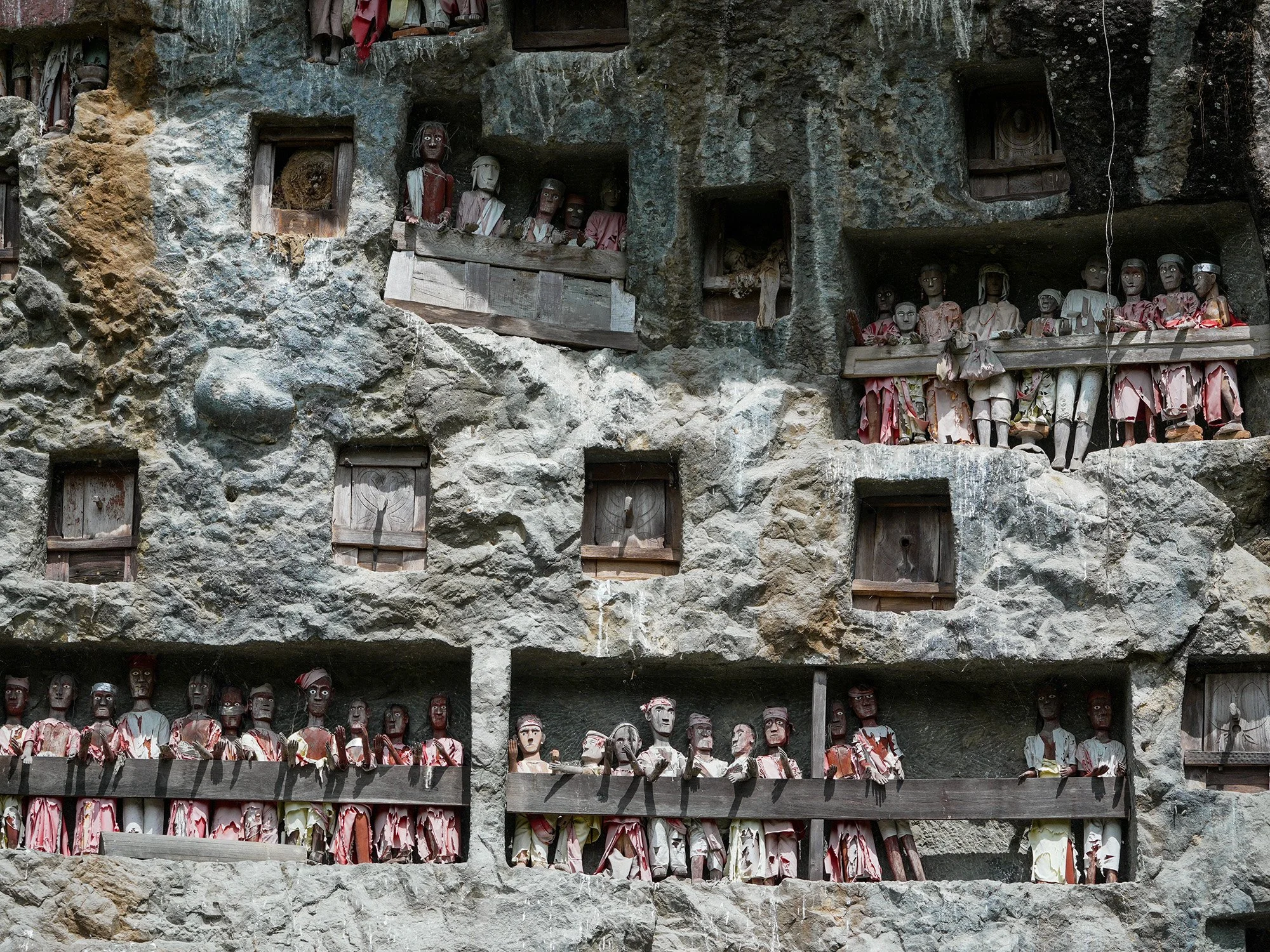
Our guide explained something that helped us understand the burial landscapes more clearly: in Torajan belief, the land is sacred, so the deceased should not simply be buried in the ground. But burning the body would pollute the air. The dead therefore belong somewhere in between - between the land and the sky. This is why caves, cliffs and rock faces become such important burial places. They are not random or dramatic backdrops; they hold a spiritual position within the landscape.
This idea changed the way we looked at the burial sites. A cave was not just a cave. A cliff was not just a cliff. These places formed a threshold between worlds, holding the dead close to the family and the land, while also placing them on the path towards the afterlife.
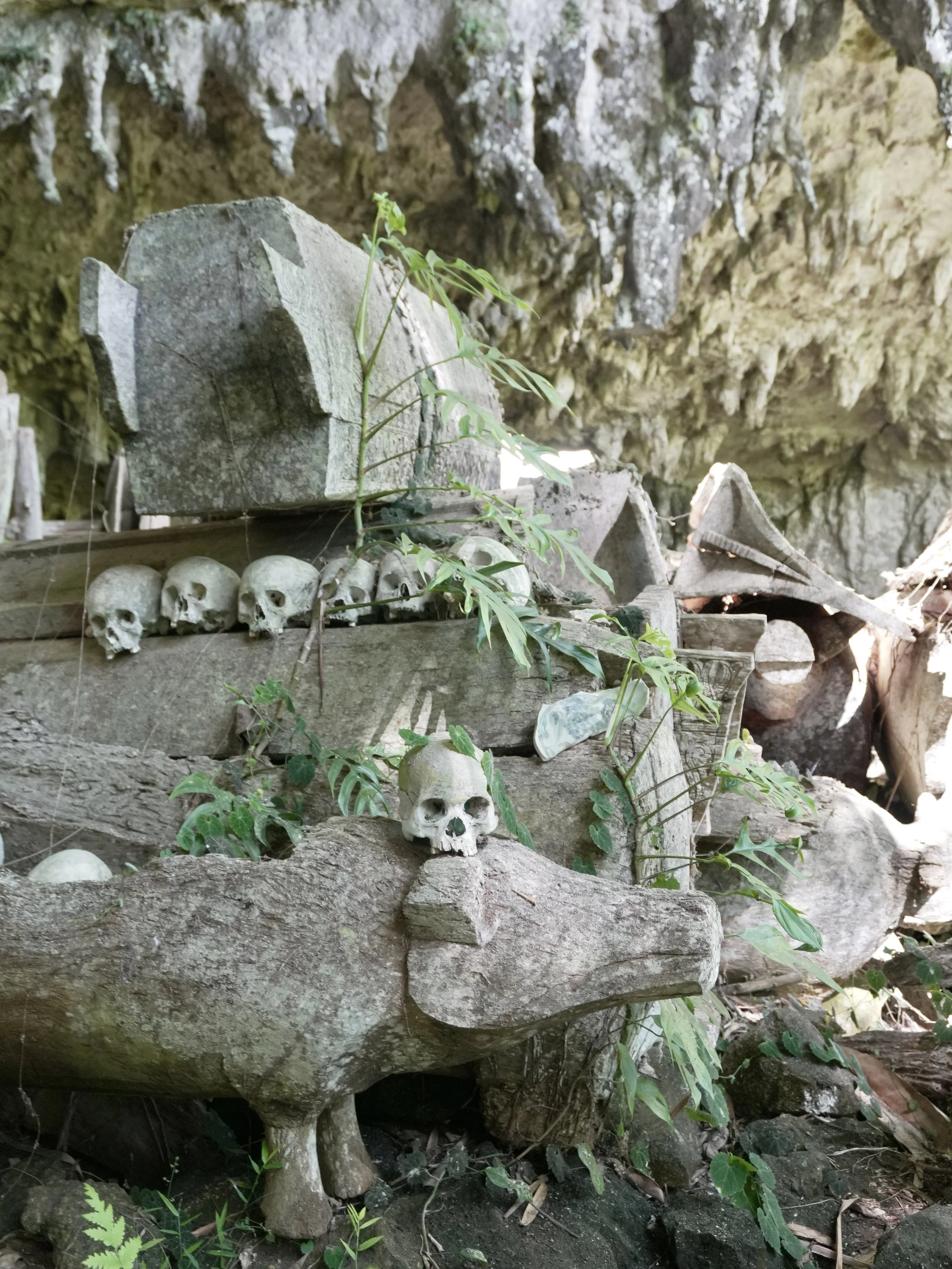
We also learned that coffins can carry symbolic meanings depending on the life of the deceased. According to our guide, single men may be buried in coffins shaped like buffalo, single women in coffins shaped like pigs, while married couples may be placed in coffins shaped like traditional houses. Even the coffin becomes part of the story: not only a container for the body, but a symbol of identity, social role and belonging.
Funerals - depends on the importance of the person and wealth of the family - themselves can be large and complex ceremonies, sometimes taking place long after (5+ years) the person has died. They are social, spiritual and economic events, involving relatives, guests, offerings, animals, temporary structures and carefully organized spaces.
This is not something to romanticize or simplify. Some parts can feel intense, especially for visitors unfamiliar with animal sacrifice or open burial sites. But what stayed with me was the spatial intelligence of it all: death is not treated as an abstract idea. It is given a place in the landscape. Cliffs, caves, stones, trees and ceremonial fields all become part of the passage between life, memory and afterlife.
The buffalo: status, sacrifice and the journey to the afterlife
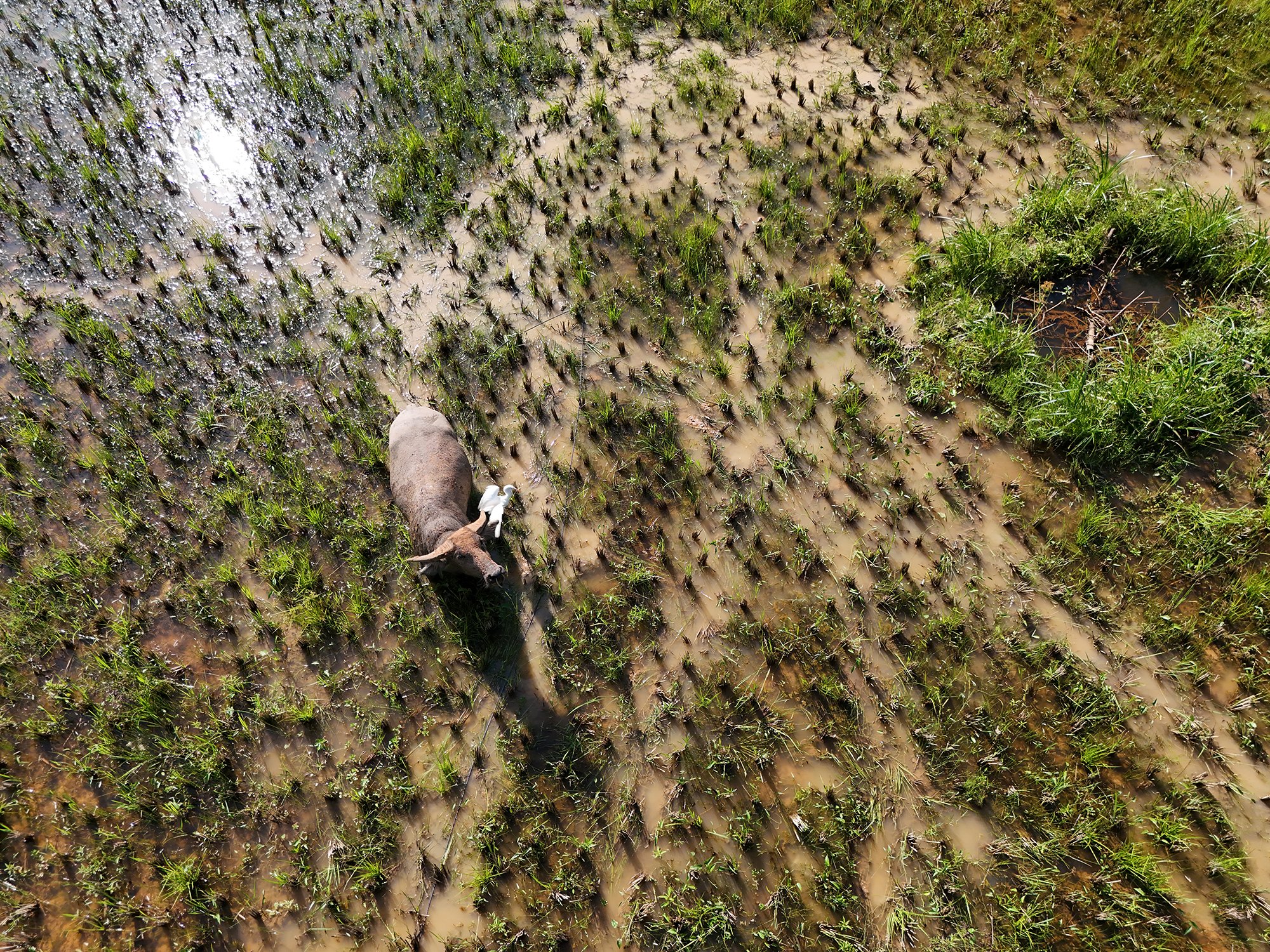
In Toraja, the buffalo is far more than an animal. It is one of the most important symbols in funeral ceremonies, carrying meaning around status, family honour, sacrifice and the journey of the soul.
Our guide explained that buffalo are considered essential for a funeral ceremony. The more buffalo are sacrificed, the safer the journey of the soul is believed to be. One buffalo may not be enough - it could get lost on the way - while more buffalo help guide and protect the deceased on the path to the afterlife.
But this belief also carries a heavy economic reality. Buffalo are expensive, often starting from around €2,500 depending on their breed, age and appearance. Rare buffalo, such as a special albino buffalo, can cost more than €20,000. Because of this, families may spend years saving enough money for a funeral ceremony. In some cases, the cost can even push a family into debt, with financial obligations passed down to other family members.
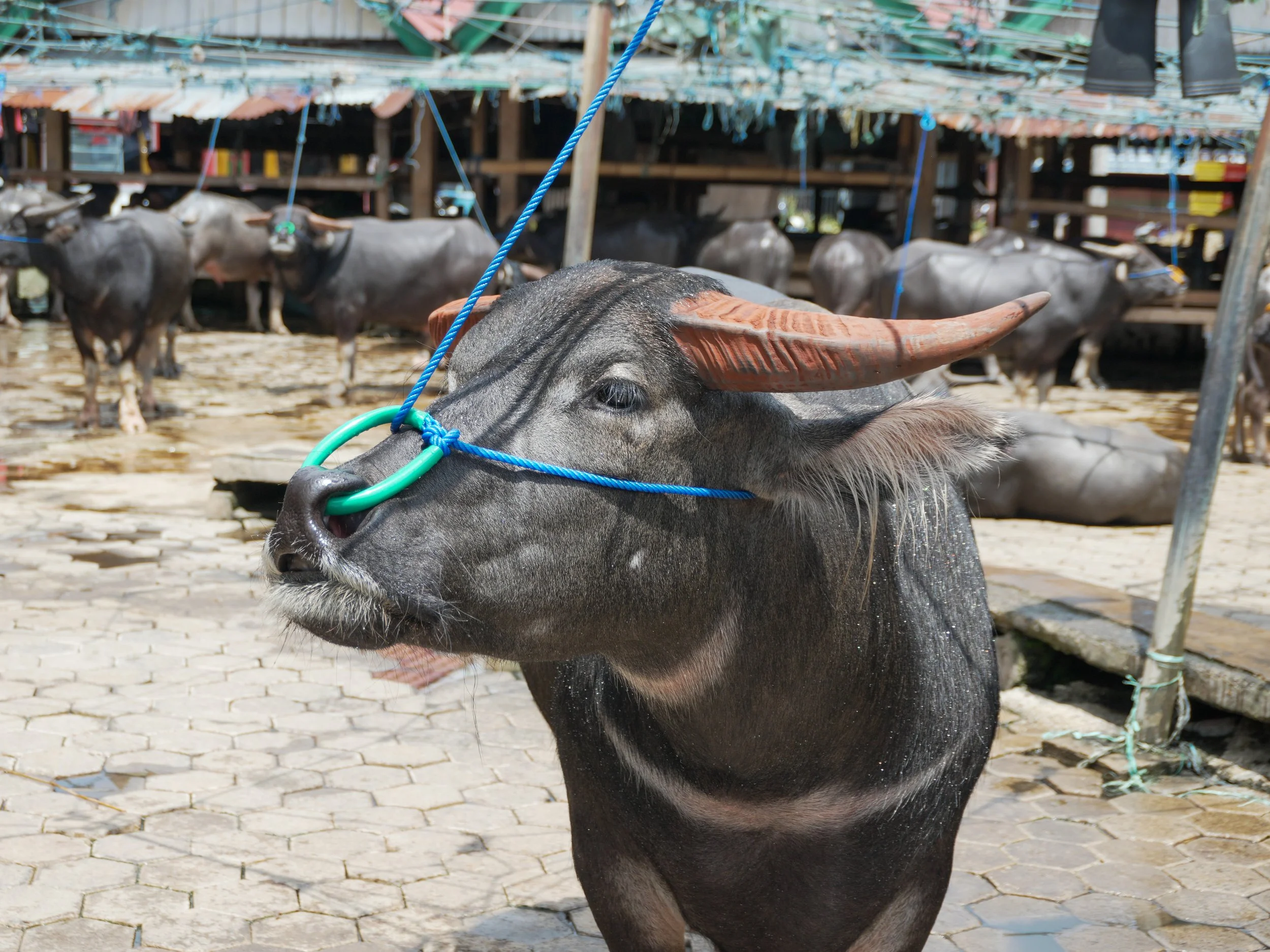
This was one of the most confronting parts of learning about Toraja. The buffalo is sacred, symbolic and deeply respected, but it also reveals the pressure placed on families by tradition, expectation and social status. A funeral is not only a spiritual event. It is also a public expression of family honour, community belonging and economic sacrifice.
As an outsider, it is easy to react quickly to the idea of animal sacrifice. But understanding the role of the buffalo made the tradition feel more complex. It sits at the meeting point of grief, belief, ancestry, status and responsibility — a reminder that Torajan funeral culture cannot be understood through one simple lens.
Due to personal reasons we did not attend on a funeral ceremony, while I have outmost respect to other cultures, it is also important to remain true to myself and my limitations - for me animal sacrifice - does not fit into the picture. According to our guide 40% of the visitors attend on the funerals, while the 60% choose to discover this region with different activities, like we did.
Landscape as archive
In Toraja, the land is not a neutral surface. It remembers.
At Kalimbuang Bori, also known as Bori’ Parinding, standing stones rise from the ground like a field of memory. This megalithic site is connected to funeral ceremonies and ancestral status, and the stones mark more than physical presence. They create a ceremonial landscape where the ground itself becomes a record of people, families and rituals. Only very wealthy families, who sacrificed more than 24 buffalos in a funeral can have a stone mark here.
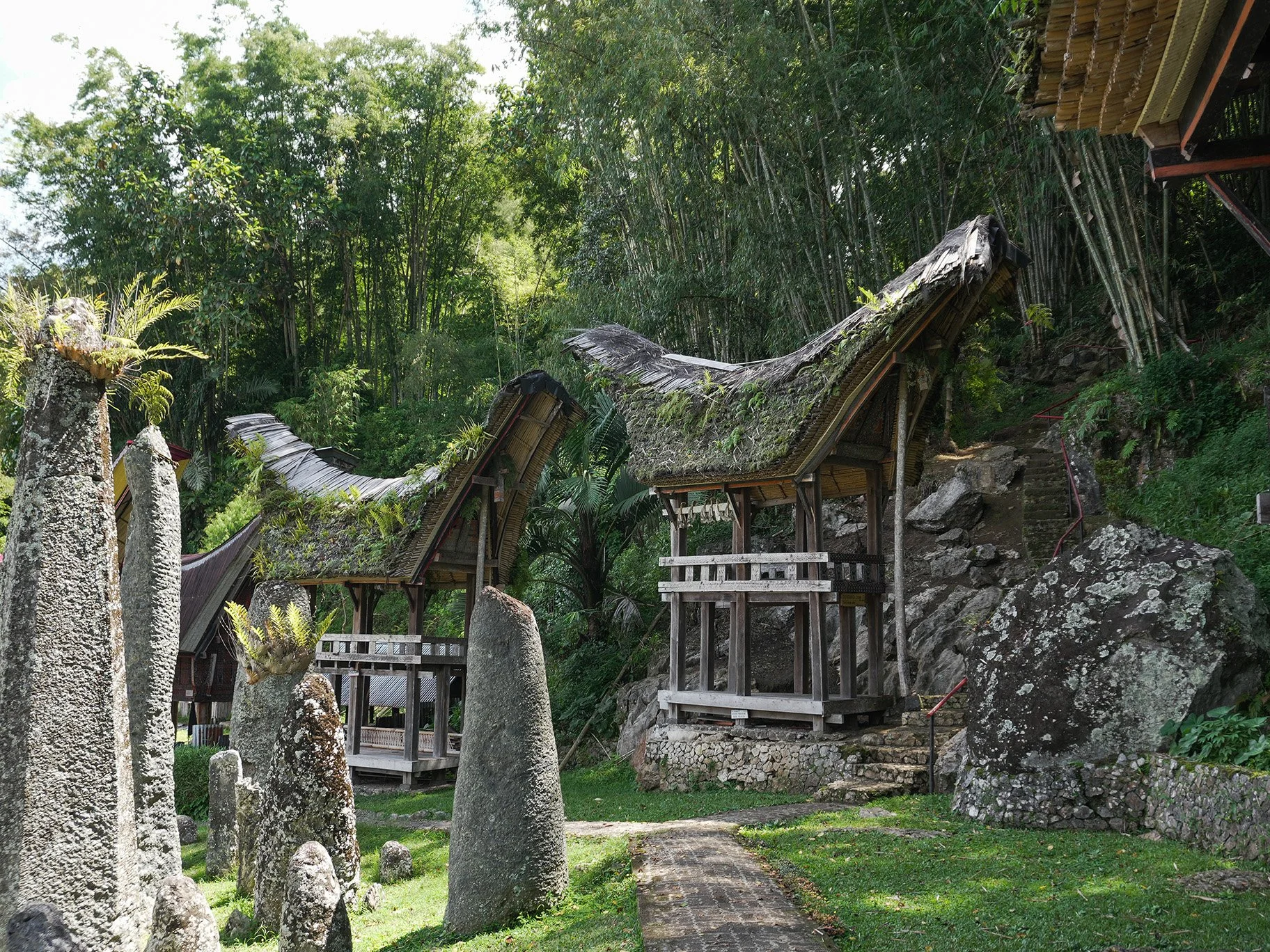
Walking through the site, I kept thinking about the idea of landscape as archive. In many places, history is stored in museums or written documents. Here, it is stored in stones, houses, graves and spatial relationships.
Lombok Parinding gave a similar feeling, but in a different way. Burial elements, stone graves, rice barns and traditional structures all appeared within the same cultural landscape. Nothing felt completely separate. The everyday and the ancestral seemed to exist close to each other, sometimes almost overlapping.
This was one of the strongest impressions of Toraja: the past is not distant. It is present, visible and physically embedded in the land.
The baby tree tradition
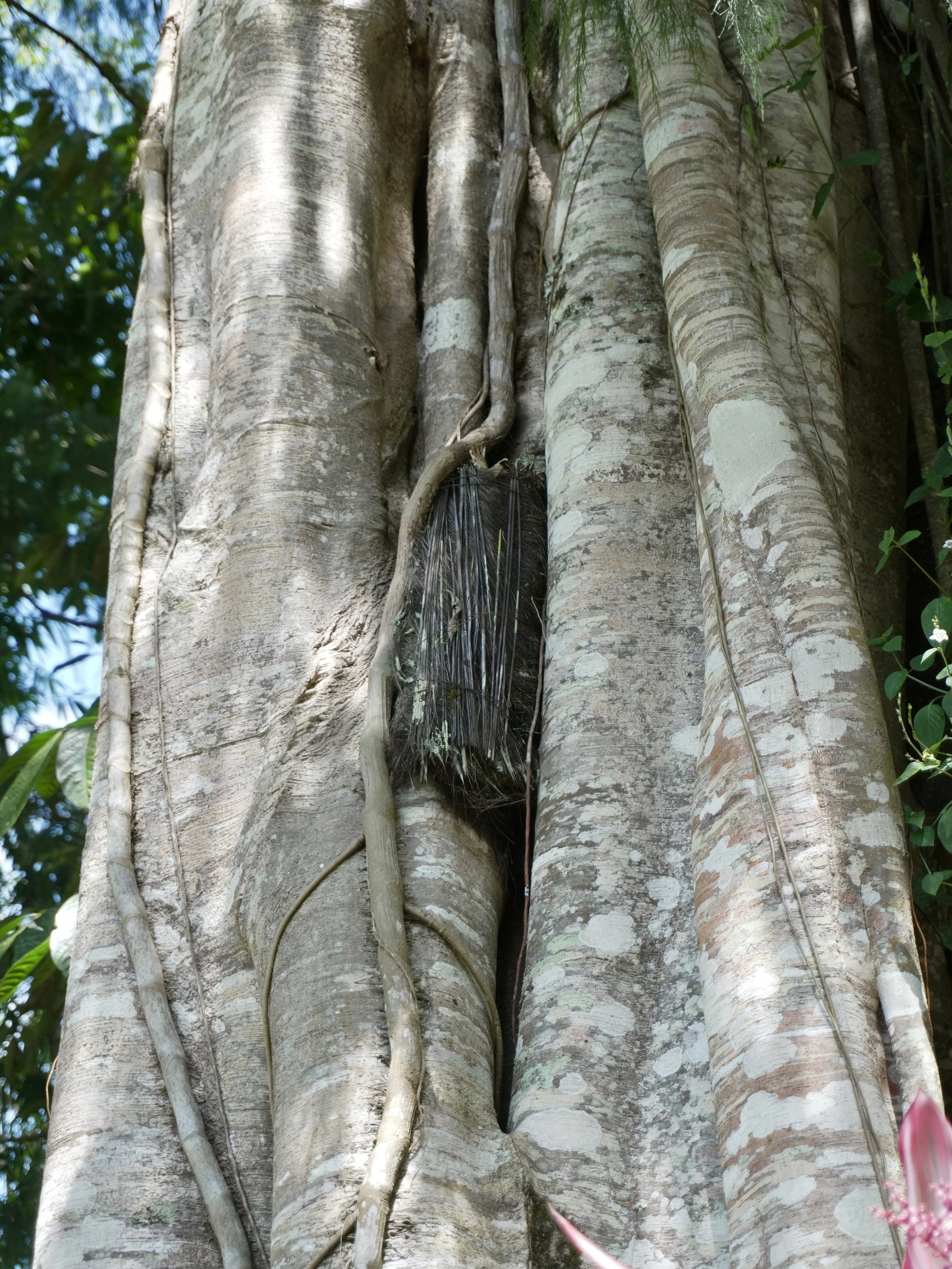
One of the most emotional traditions connected to Toraja is the former baby tree burial practice at Kambira. Babies who died before growing teeth were once placed inside living trees. The tree was understood almost like a new mother, its sap symbolically connected to milk, allowing the child to continue into the afterlife through a living organism. Torajan people predominantly used the Tarra tree (a type of jackfruit or Artocarpus species).
This tradition is no longer practiced today, but the site remains deeply moving.
There is something incredibly delicate in the idea that a tree could hold a child, not as an object of death, but as part of a continued life cycle. It is one of the most poetic and heartbreaking examples of how Torajan cosmology connects nature, body, spirit and afterlife.
Our route through Tana Toraja
During our 2.5 days, we explored a mix of cultural sites, villages and natural places around Rantepao.
Rantepao became our base: a practical starting point, but also the place where we began to feel the rhythm of the region. From there, we visited Objek Wisata Kalimbuang Bori, one of the most memorable cultural sites of the trip. The standing stones, traditional structures and surrounding landscape made it feel less like a tourist stop and more like an open ceremonial field.
We also visited Lombok Parinding, where burial traditions and built heritage are strongly present within the landscape. Places like this are difficult to describe simply. They are beautiful, but they are also sensitive. They are cultural sites, but also ancestral places. They ask for curiosity, but also restraint.
Passing through Tallunglipu Matallo and Kecamatan Sanggalangi gave us a wider sense of Toraja beyond the main attractions. These in-between landscapes often say as much as the famous sites: villages, rice fields, family compounds, animals, roads, vegetation and daily life all form part of the bigger cultural picture.
After the intensity of the burial landscapes, Tilanga Natural Pool offered a softer pause. Surrounded by greenery, water and local life, it reminded us that Toraja is not only about death and ritual. It is also about everyday landscapes: places to swim, gather, rest and breathe.
Tombang Langad became part of that wider impression - another piece of the highland landscape, another reminder that in Toraja, meaning is not limited to famous sites. It is often found in the movement between them.
How to visit respectfully
Tana Toraja is a place where tourism and sacred culture meet very closely. That makes respect essential.
A local guide is not only useful, but important. Without context, many places can easily be misunderstood or reduced to something exotic. With explanation, they become part of a much deeper cultural system.
Ask before photographing people, ceremonies or sensitive sites. Dress modestly. Be quiet around burial places. Do not treat funerals or ancestral sites as performances. And most importantly, accept that you will not understand everything.
Some landscapes are not there to be fully consumed by visitors.
Final thoughts
Tana Toraja changed the way I think about landscape.
As a landscape architect, I often look at land through systems: ecology, water, access, materials, vegetation, public space. But in Toraja, landscape is also ancestry. It is ritual. It is family structure. It is spiritual geography. It is architecture, cemetery, archive and home at the same time.
What stayed with me most was the idea that land is never just ground. It can hold memory. It can guide the dead. It can protect the living. It can carry stories through stones, trees, houses and cliffs.
Tana Toraja is not an easy place to summarize, and maybe it should not be. It is complex, emotional, beautiful and sometimes confronting. But if you visit with patience and respect, it becomes one of those rare places that stays with you long after you leave.
Not because you understood everything. But because the landscape made you feel how much there was to understand.