
Islands of Komodo
5-7min read
The first stop of our three-week journey through Indonesia was Komodo National Park. We arrived in Indonesia via Jakarta, where we spent one night before catching a morning flight further east to the islands of East Nusa Tenggara. On the western tip of Flores lies Labuan Bajo, a small harbour town that serves as one of the main gateways to Komodo National Park.
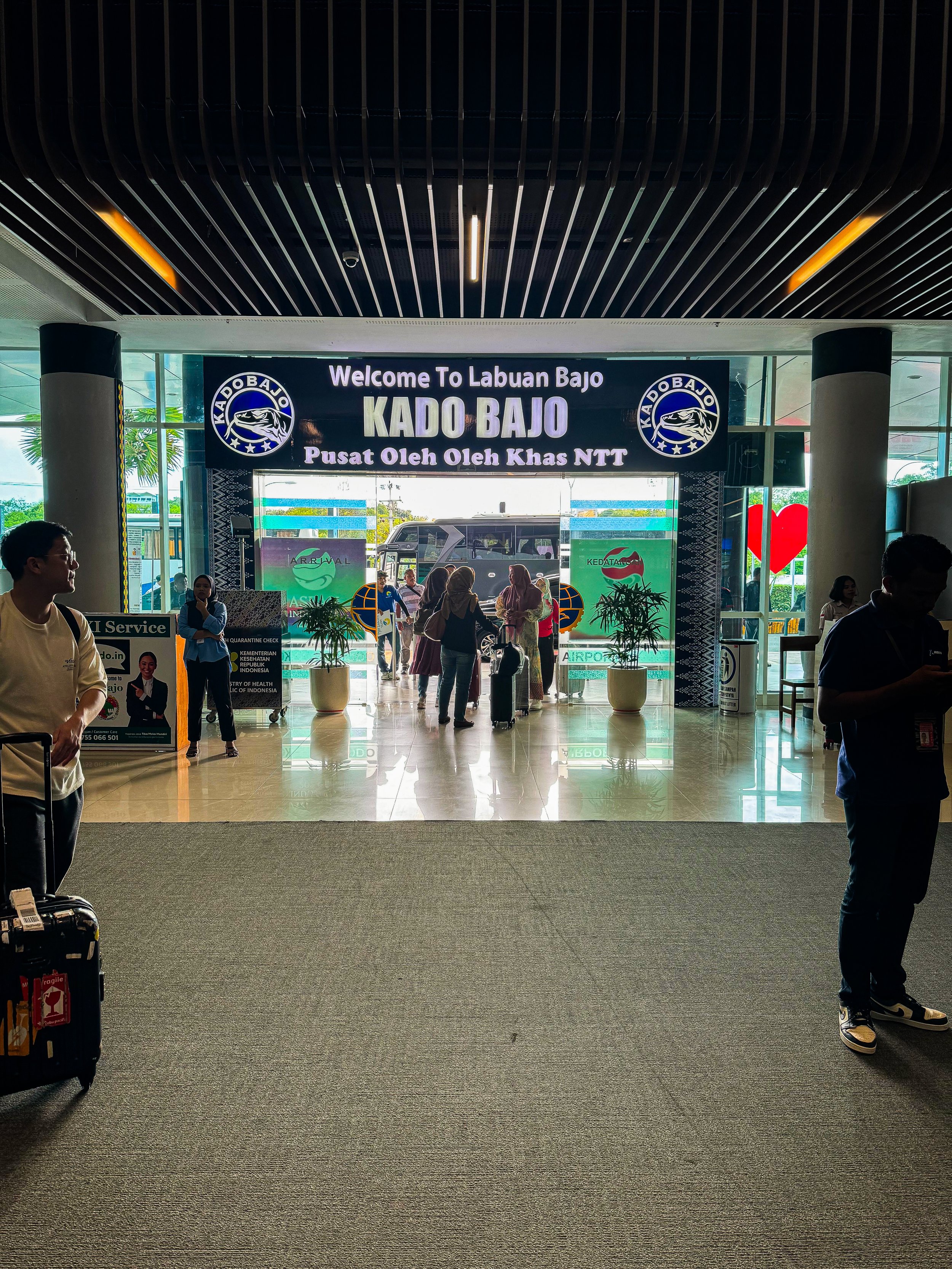
We spent two days acclimatising and exploring the town before setting off. The park can be discovered in several ways, either on a day trip or as part of a multi-day boat tour. We chose a three-day liveaboard, which felt like the perfect amount of time to get a first glimpse into the rhythm of these extraordinary islands. We booked the trip through Seek Sophie, a female-led business, and would also like to thank Michelle for the quick replies and smooth organisation throughout. Our boat was part of the Kanha Liveaboard fleet.
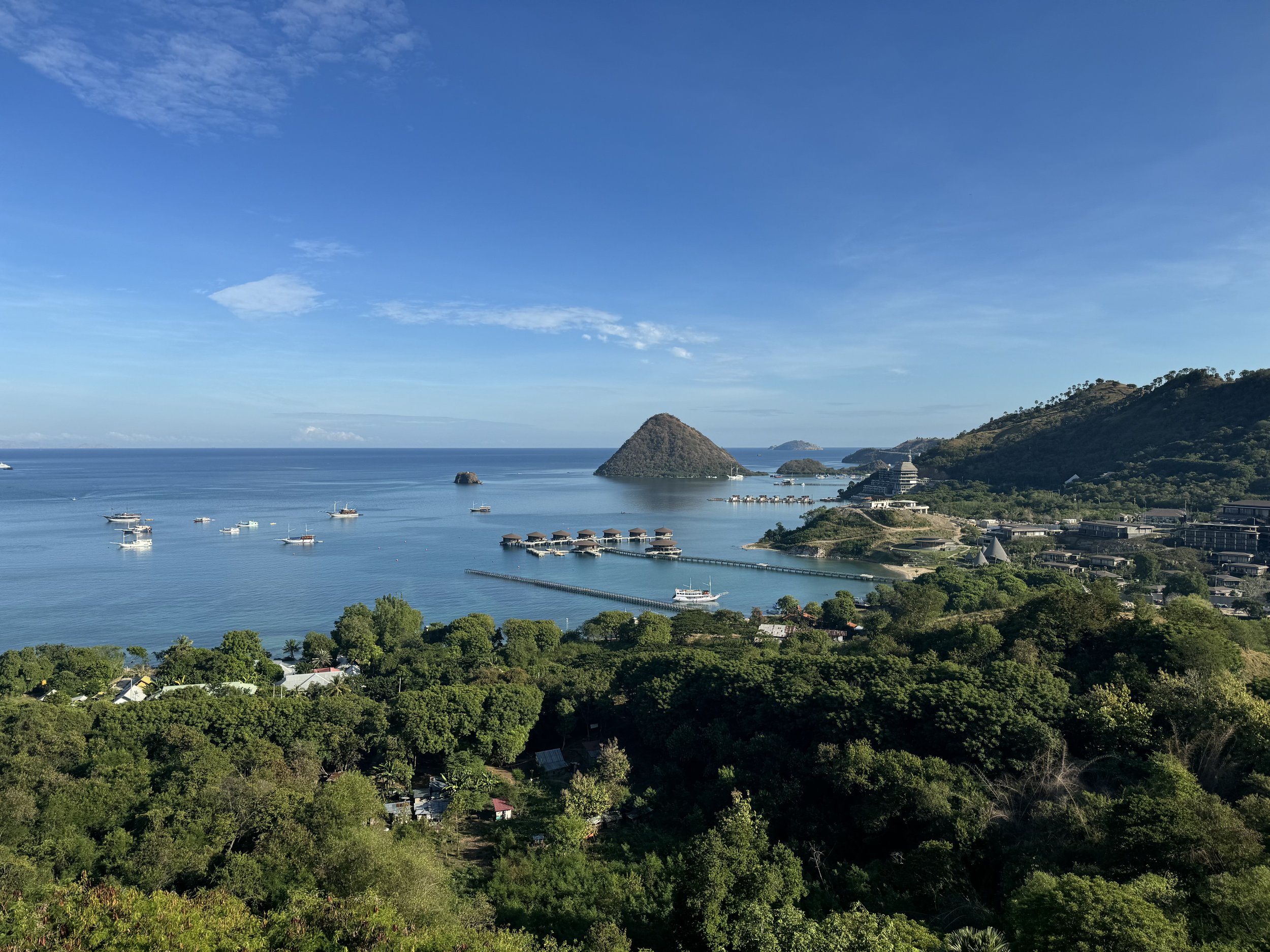
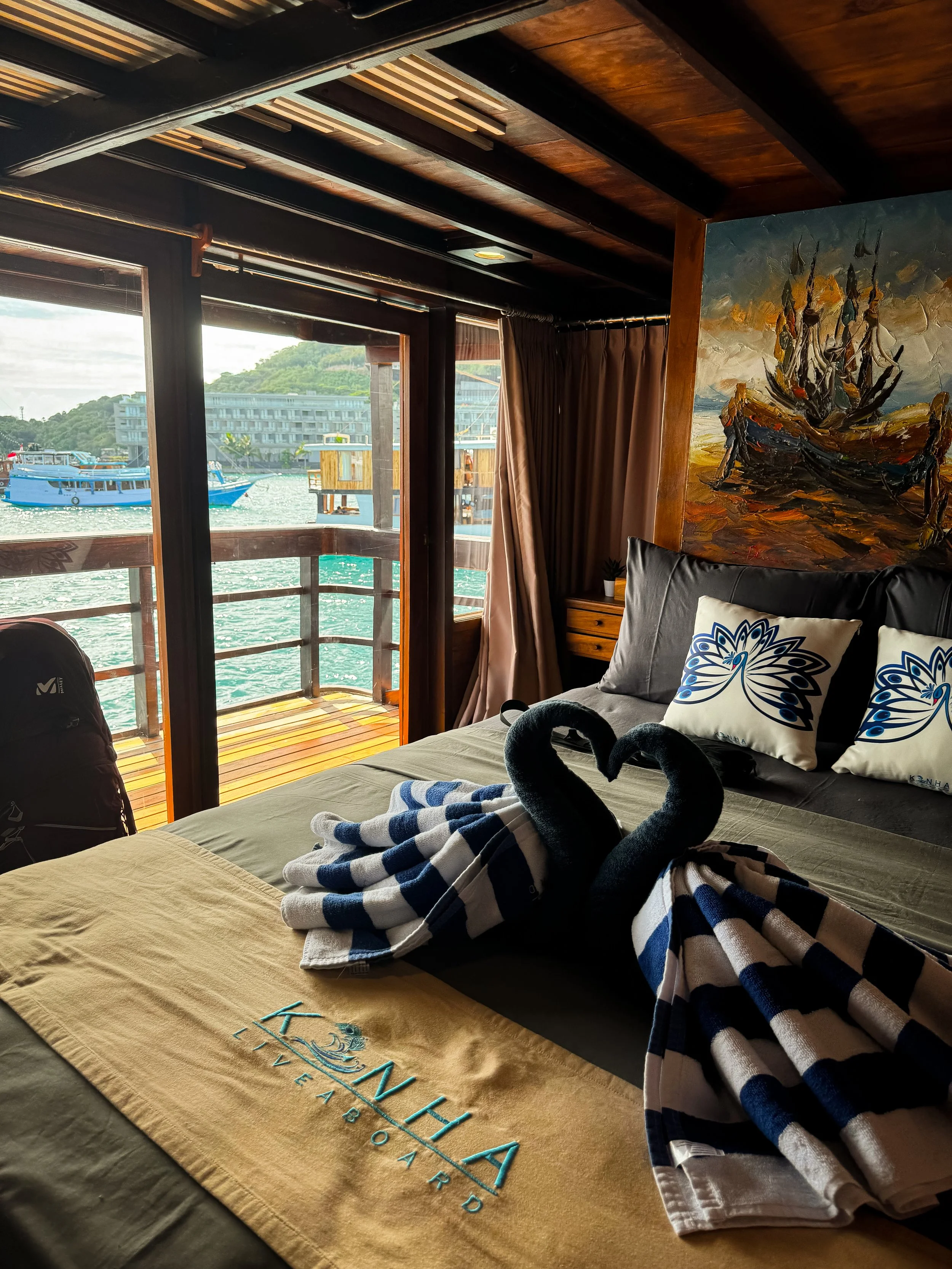
By then, we had already settled into the tropical pace of island life. With our backpacks in hand, we waited at the harbour in Labuan Bajo for boarding. It is definitely worth carrying cash before the trip, as smaller villages often do not offer card payment options. A small motorboat took us out to the main boat, where we were lucky enough to stay in the nicest cabin on board. As this was our first trip of this kind together, we wanted to make it special. I had also never slept on a boat before, so having our own cabin felt like the most comfortable and reassuring option.
After departure, we were given a short briefing by Angelo, who led the team over the next three days, as well as by Rafleyes, who also captured several photos of us during the trip. Unfortunately, the weather was not fully on our side, so the route had to be adjusted from the start in order to avoid stronger storms. Our first stop was Sebayur Island, with its beautiful turquoise waters and vibrant coral reefs. Nearby Sebayur Kecil is known for its stronger currents and sloping reef walls, where larger fish species such as snappers and trevallies can often be spotted. From there, we continued west towards Manta Point, though sadly we did not meet any manta rays that day. Instead, we moved on to our final stop of the day: Pulau Makasar, also known as Taka Makasar.
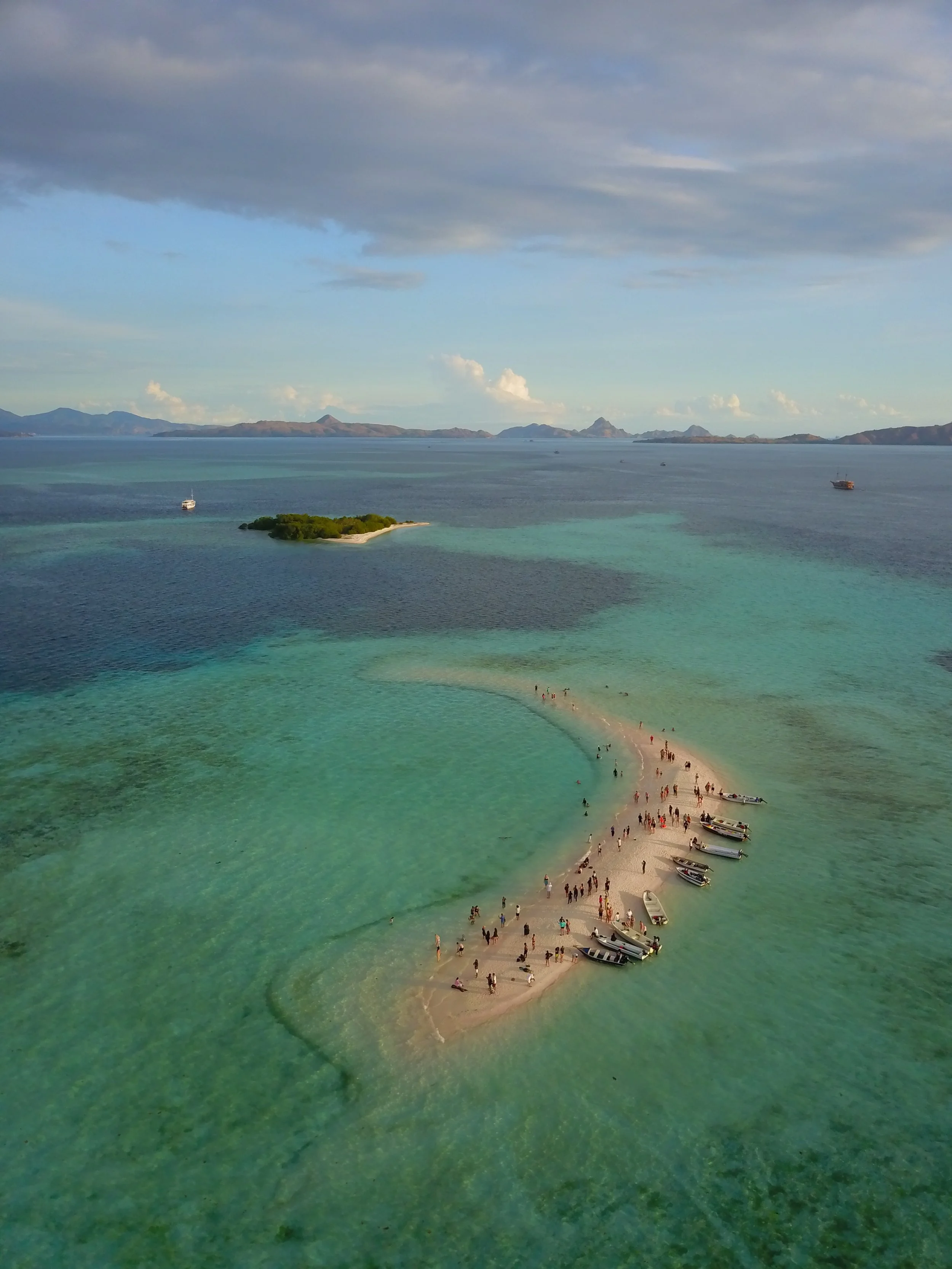
This crescent-shaped sandbank only appears properly at low tide and creates the surreal feeling of standing in the middle of the sea. After swimming back to the boat, a generous dinner and a quiet evening awaited us, while the boat continued towards Padar Island overnight.
The next morning, we woke up at five. After a light breakfast, we started the climb to Padar’s famous viewpoint, which takes around 40 to 60 minutes depending on your pace. To our disappointment, the morning was cloudy, so the view did not fully reveal itself in its most iconic form. Still, Padar was impressive. Its landscape is dramatic and rugged, shaped by steep volcanic hills and deep bays cutting into the coastline. The island has a dry climate, and its vegetation consists mainly of grassland and low shrubs, creating an almost savannah-like atmosphere. Four deep bays shape the island, each with beaches of slightly different tones — mostly white, but with hints of grey and pink as well.
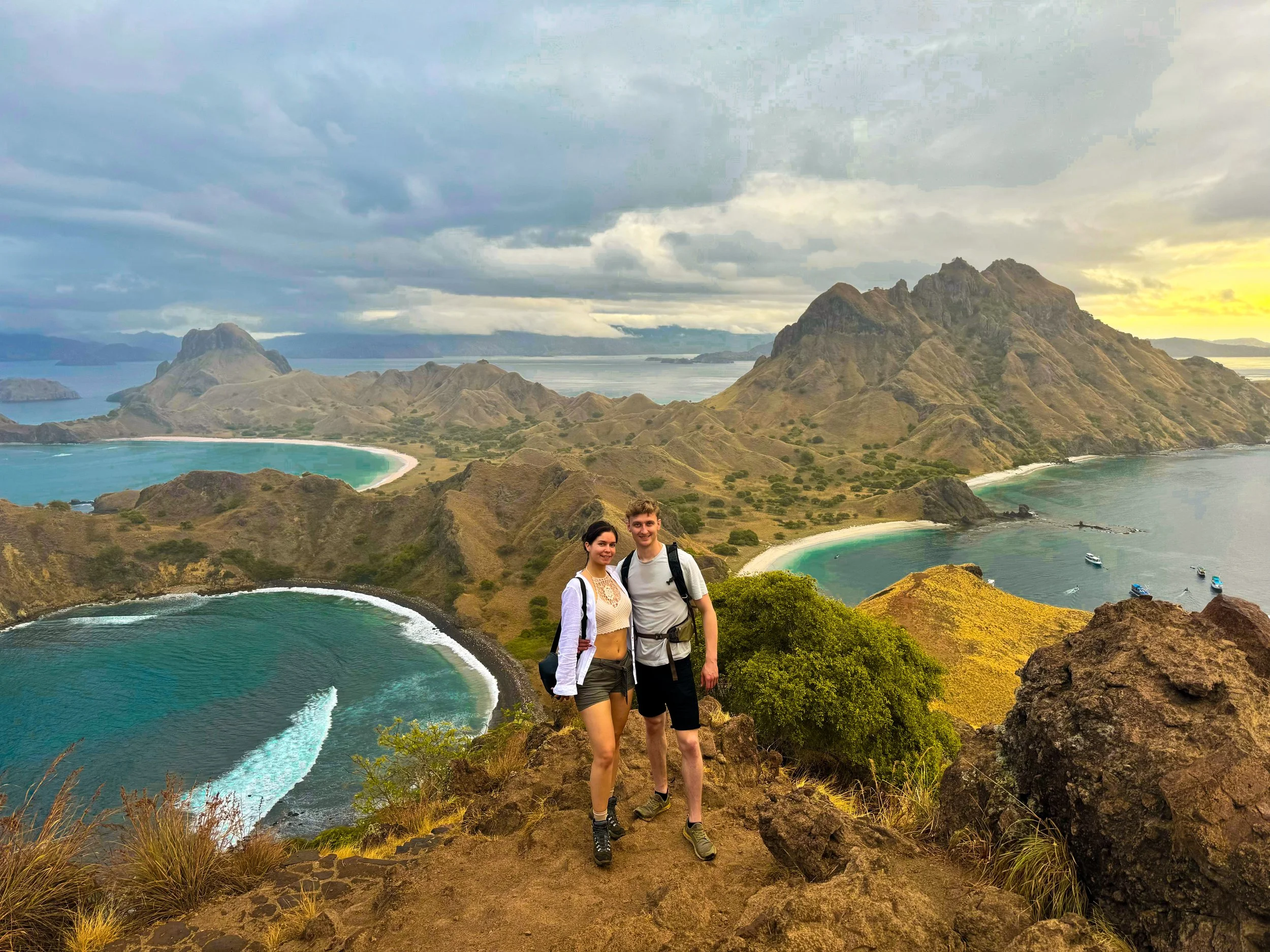
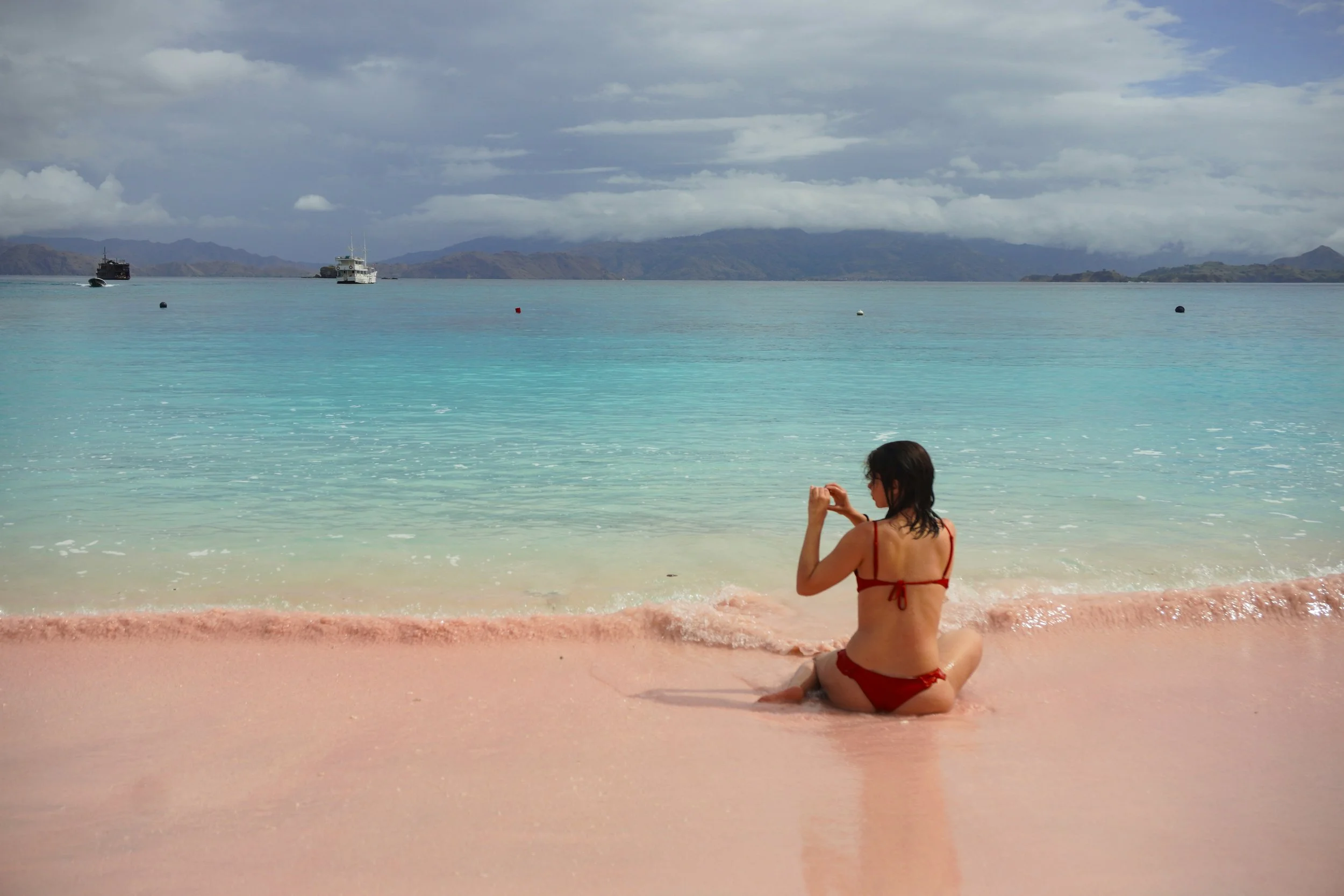
As the storm approached, our descent turned out to be much quicker than the climb up. We then continued towards Pink Beach, on the northern side of Padar. Luckily, the storm passed and for a brief moment even the sun came out. Along the shore, the beach glowed in a soft pink tone, created by the mixing of crushed red coral fragments with white sand. Fewer than ten natural pink beaches exist in the world, and Komodo National Park is home to one of them.
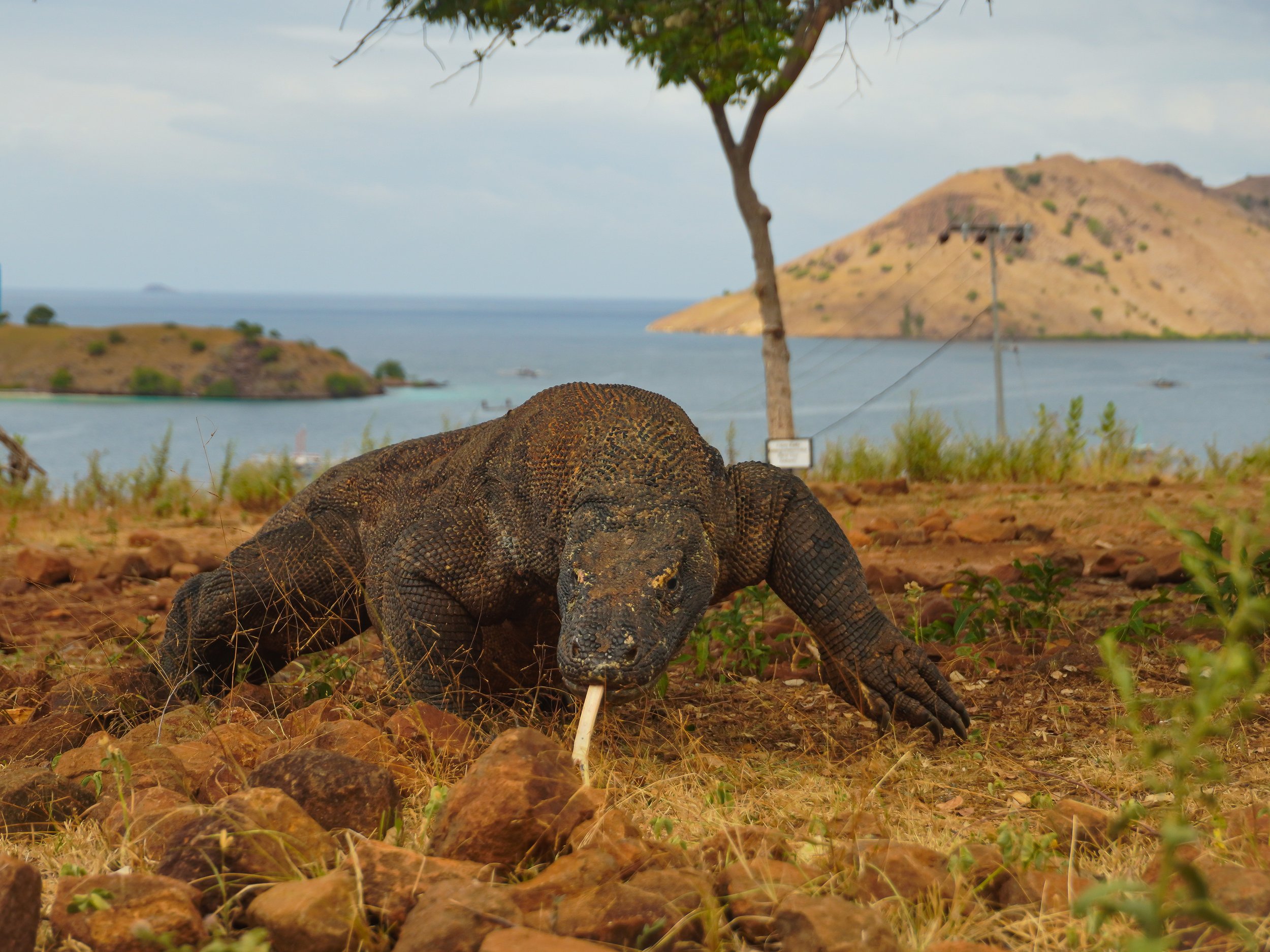
Our next stop was Komodo Island and the small village located there. After arriving, we first attended a short briefing explaining the safety rules. The Komodo dragon is the island’s apex predator and, in rare cases, can also be dangerous to humans, so these animals should always be observed with deep respect and caution. I would love to write more about them in a separate post, because they truly deserve it. We were lucky enough to encounter several dragons during our visit. Since they are less active in the midday heat, we also saw a few large individuals resting lazily in the shade, which gave us the chance to photograph them calmly. In the village, we bought two small hand-carved wooden dragons, which have been guarding our little belongings back in Europe ever since.
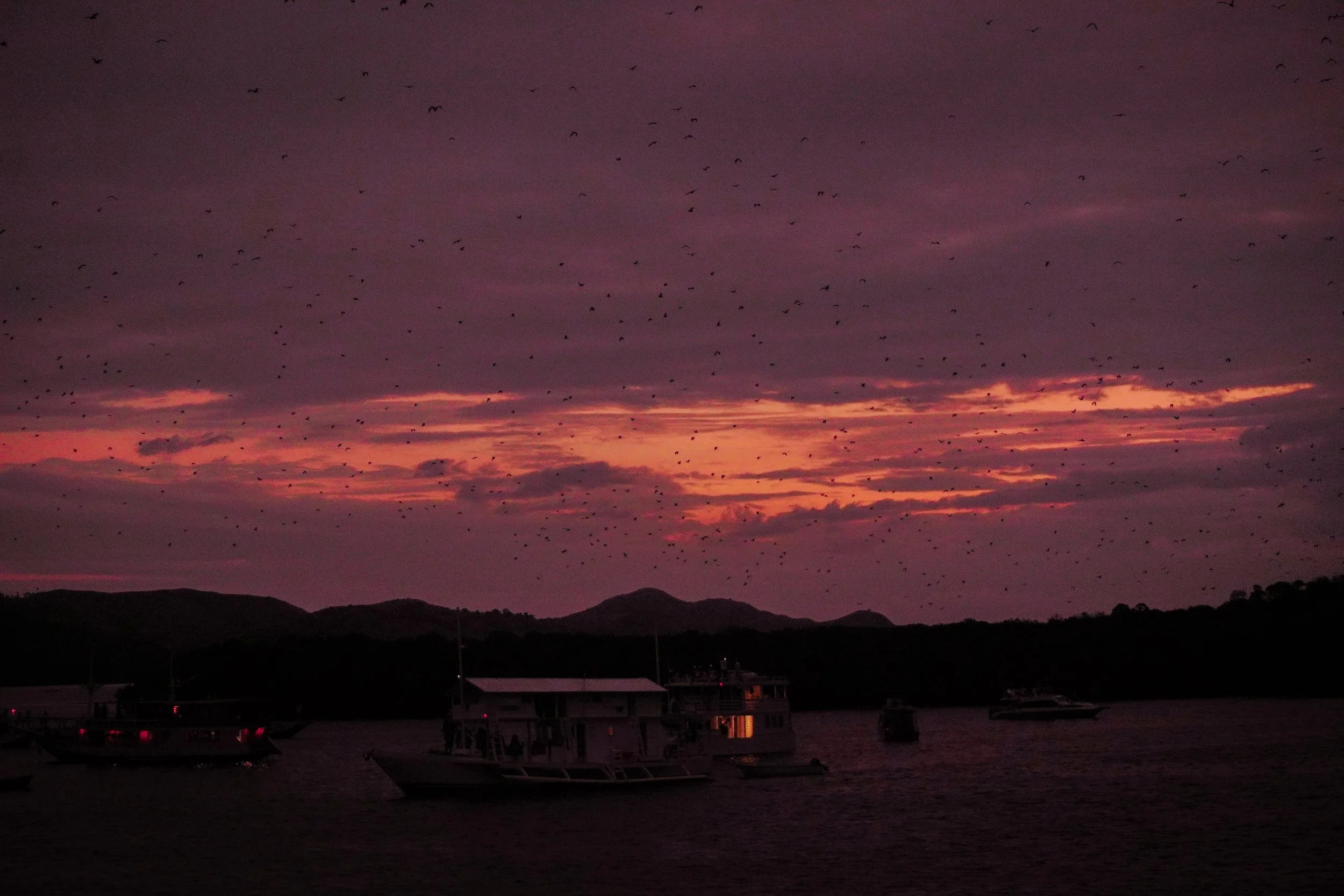
After Komodo Island, the last stop of the day was Kalong Island. This is best visited shortly before sunset, when hundreds or even thousands of flying foxes rise from the mangroves and head out into the evening sky in search of food. Against a horizon painted in pink, orange and red, the scene felt almost cinematic. The island is also known as Fruit Bat Island. That evening, we ended the day with a small farewell party on the boat while sailing north.
At dawn on the final morning, we woke up near Kelor Island. After breakfast, another short climb awaited us, this time only around ten minutes to reach the top. The small island is surrounded by bright turquoise water, and near the shore we even spotted a few baby sharks hunting in the shallows. Around Moringa Beach, local handmade products can also be purchased from the islanders. Our final stop was nearby Manjarite, where we jumped into the water one last time. At last, the sun came out, and suddenly the marine world revealed itself in completely different colours. It was the perfect ending to an intense and unforgettable three-day adventure.
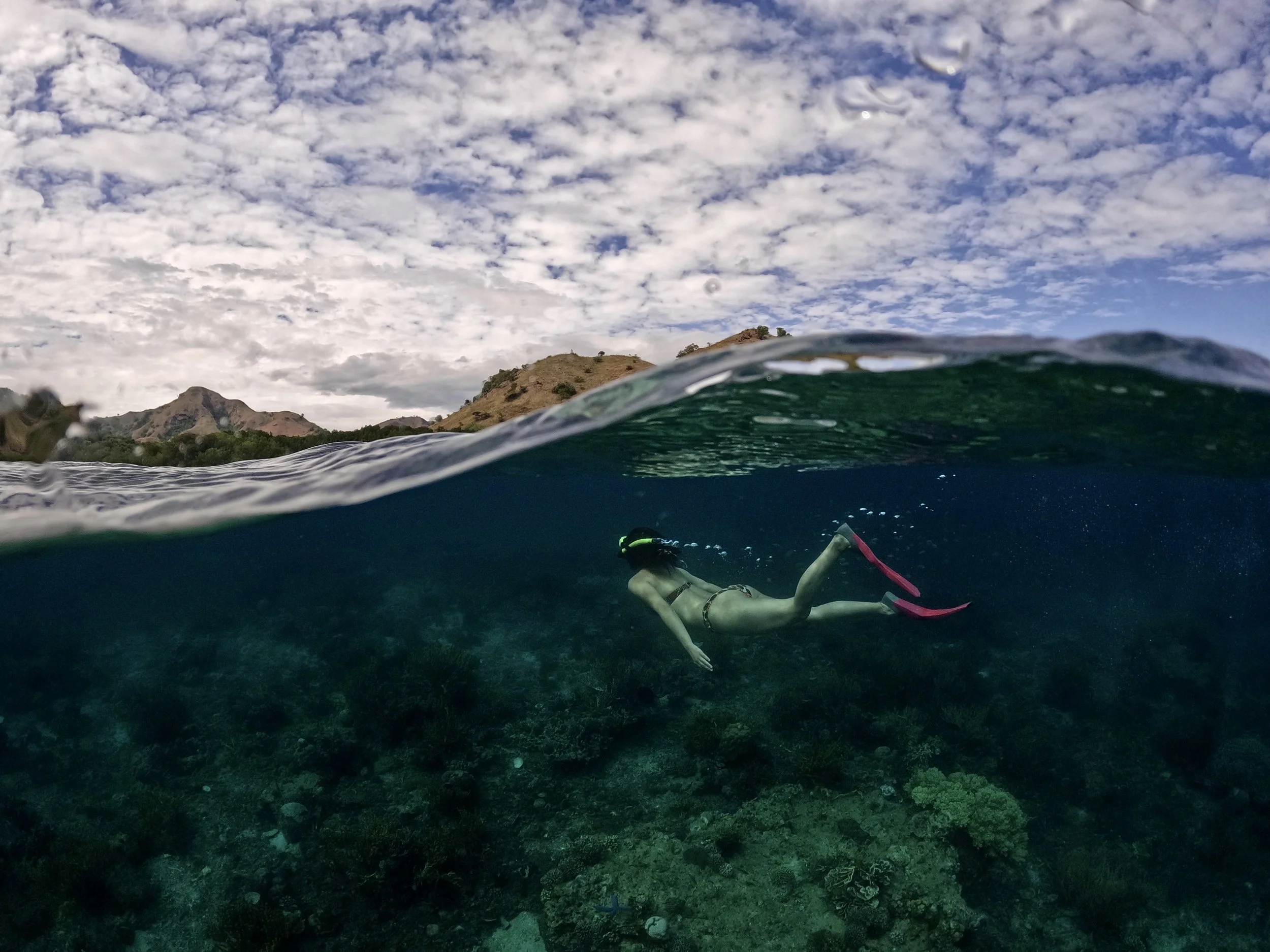
During this journey, we visited extraordinary places and discovered remarkable landscapes both above and below the water. Just as importantly, we formed friendships not only with fellow travellers, but also with some of the local guides, whose lives we still follow with affection to this day. We truly hope to return to this special corner of the world one day.